Pruning is next year's crop
Every bunch you pick in October was decided in January, in the cold, before the vine had done anything but sleep.
How many buds stay on the vine, and therefore how much fruit there can be.
Too many and nothing ripens properly; too few and the wires stay half empty for nothing.
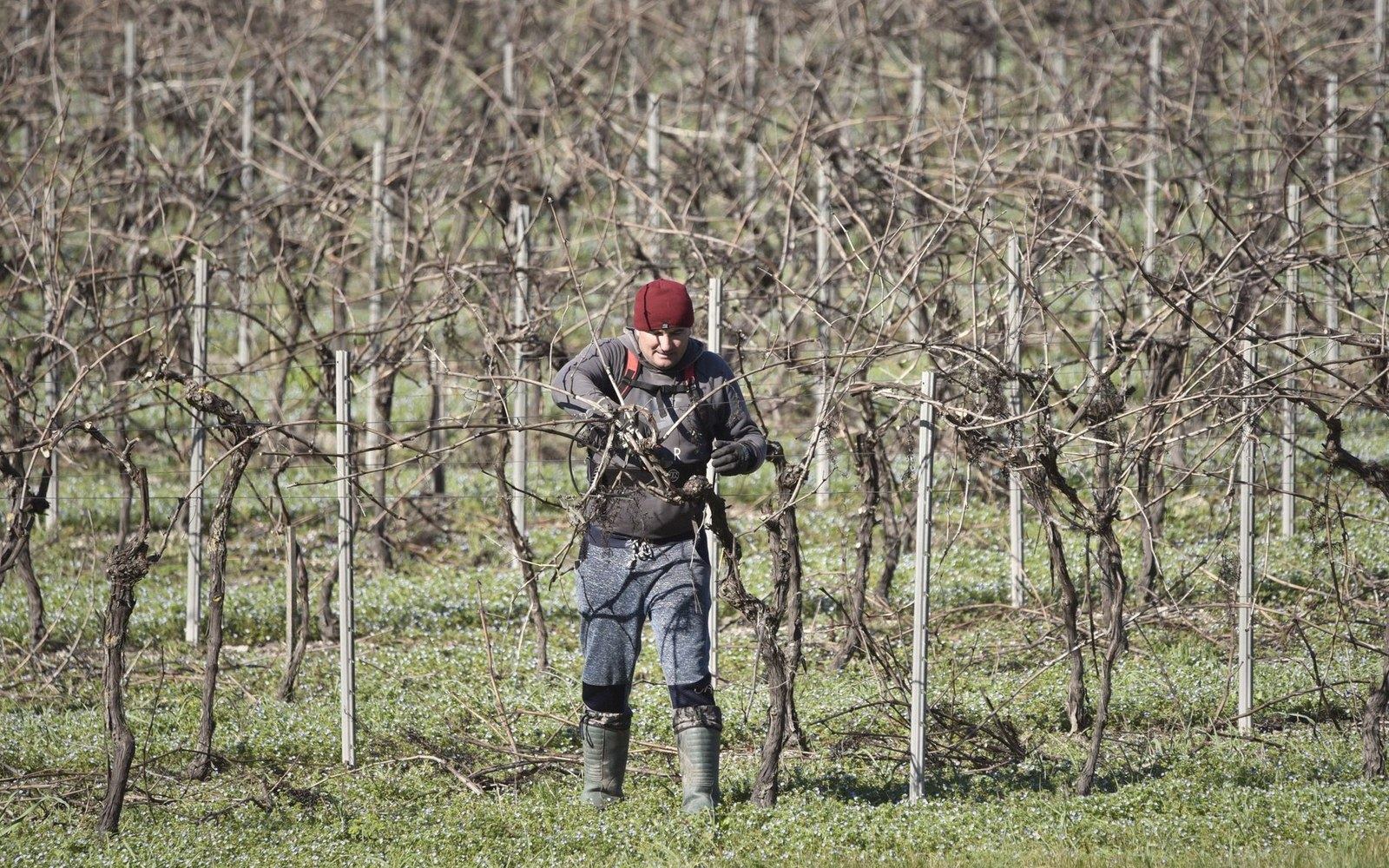
The cut comes first
Harvest ends and the vineyard goes quiet. The leaves drop, the wood hardens off, and for a few weeks there is very little to do but wait for the vine to complete what it started in September — pulling the last sugars and nutrients out of the canes and into the trunk and roots for storage. That process takes until late autumn. Then dormancy sets in properly, the tissue stops moving, and the vine is as close to inert as it gets.
That is when the pruning season opens.
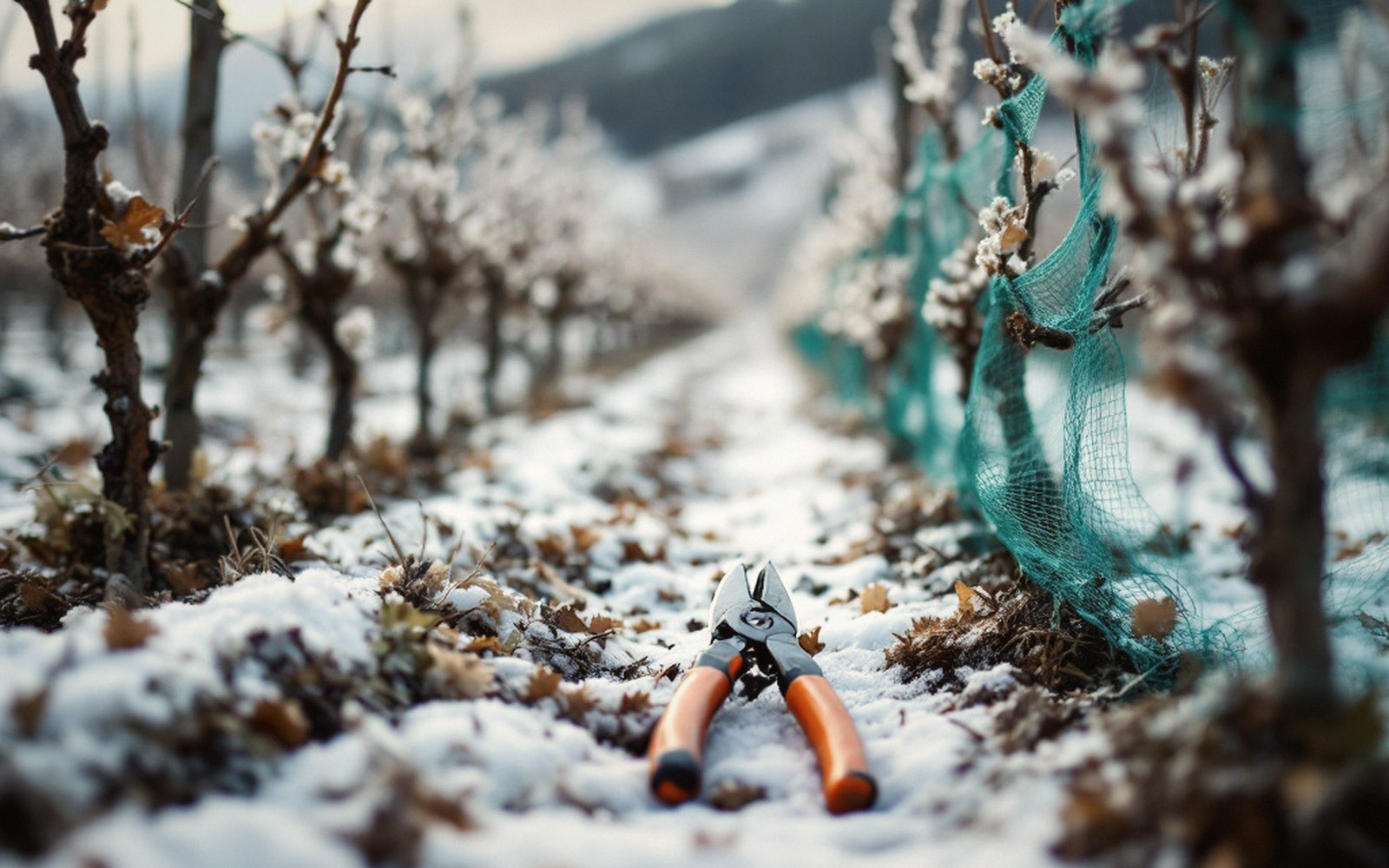
In a cool-climate block below an escarpment, the window typically runs from late November or December through to February or March, depending on variety and site. The work happens in the cold, often in poor light, sometimes in snow. A crew moves along the rows with secateurs and loppers, and in the space of a few cuts per vine, they determine almost everything about the coming season: how many shoots will grow, how many flower clusters those shoots will carry, and, within broad limits, how much fruit will ripen before the next harvest.
That is not a loose approximation. It is the mechanism. The buds that become next year's shoots are sitting right there on the wood that was grown last summer — already formed, already containing within them the rudimentary flower clusters that will become grapes. The pruner's job is to decide how many of those buds to leave on the vine, and which ones.
What the wood tells you
A cane — the long, flexible shoot that grew this past season and has now hardened to brown wood — is the unit the pruner reads. Its diameter, its internode spacing, the depth of colour it has taken on: all of these say something about how well the vine photosynthesised last summer and how well it stored what it made.
A cane as thick as a pencil, with moderate spacing between nodes and a warm reddish-brown colour, is well-ripened wood. The buds on it are likely to be fruitful. A thin, pale cane that grew too fast in wet conditions, or a thick, pithy one from a vigorous rootstock on fertile ground, both carry less reliable buds — the embryonic flower clusters inside them are less developed, and the shoots that emerge will set less fruit. The pruner is not just counting; they are reading.
This is the part of pruning that cannot be reduced to a formula, and it is why experienced pruners are worth keeping. The same two buds on different wood in the same row are not the same decision.
The pruner is, in effect, writing a yield forecast in January, in pencil, knowing that spring frost, coulure, disease, and a dozen other events can revise it downward.
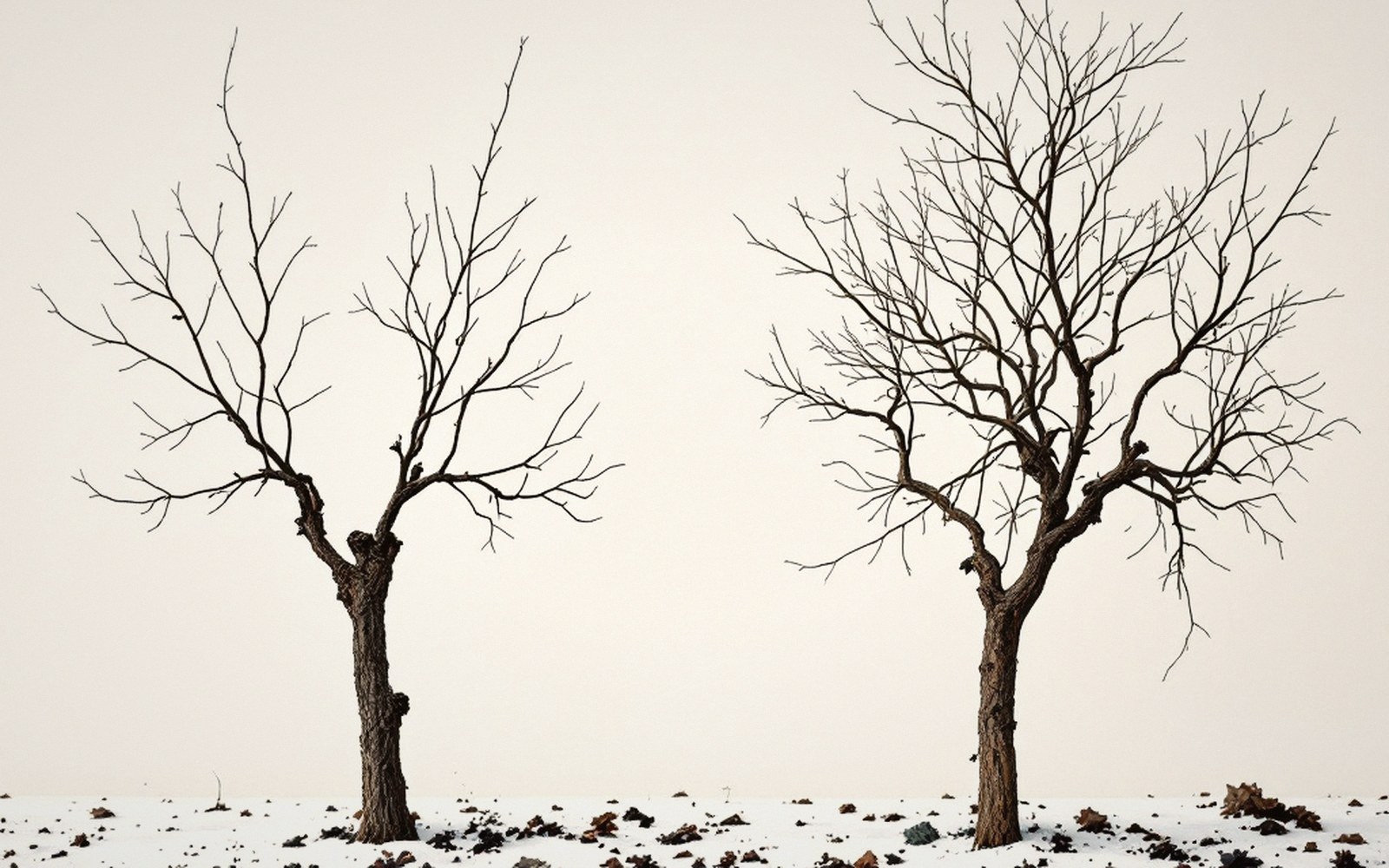
Once the pruner has assessed the wood, they choose a pruning system. Cane or spur pruning are the two main approaches, and they make different assumptions about vine balance and winter hardiness. In cane pruning, whole canes are selected and tied down to the wire, with all their buds retained; in spur pruning, short two- or three-bud stubs are left at regular positions along a permanent cordon. The system shapes everything downstream — how the canopy develops, how fruit is distributed along the row, how the vine ages over time.
The arithmetic of buds
Every bud left on the vine is a potential shoot, and every shoot carries a certain number of flower clusters depending on variety and position on the cane. The pruner is, in effect, writing a yield forecast in January, in pencil, knowing that spring frost, coulure, disease, and a dozen other events can revise it downward.
Counting buds is the discipline that tries to make this precise. Historical records from the block — average fruitfulness per bud, average bunch weight, typical crop load — are used to work backwards from a target yield to a bud number. Leave too many buds and the vine cannot ripen the crop it produces; the fruit comes in dilute, the wood does not harden properly, and the following year's buds are compromised before they are even counted. Leave too few and you have surrendered yield for nothing, stressing the vine while the wires stay half empty.
The bud count is a balance struck between this year's ambition and next year's capacity. A vine that is overcropped in August is already being pruned conservatively for the following January, whether anyone has made that decision yet or not.
Severity, timing, and the cold
How severely you prune also affects when the vine wakes up. Harder pruning — fewer buds — tends to delay bud break slightly, because the vine's stored reserves are concentrated into fewer growing points and it takes longer to reach the threshold. This matters enormously on a frost-prone site below an escarpment, where cold air pools in the low ground and a late frost in April or May can destroy an entire crop of young shoots in a single night.
Late pruning takes this principle further: by deliberately holding off the cut until February or even March, some growers delay bud break by days or a couple of weeks, enough to clear the worst of the frost window. The trade is that the work compresses and the crew is under pressure when other tasks are beginning. But on a site where one night in May can take the whole year's income, pushing the pruning date is a rational insurance.
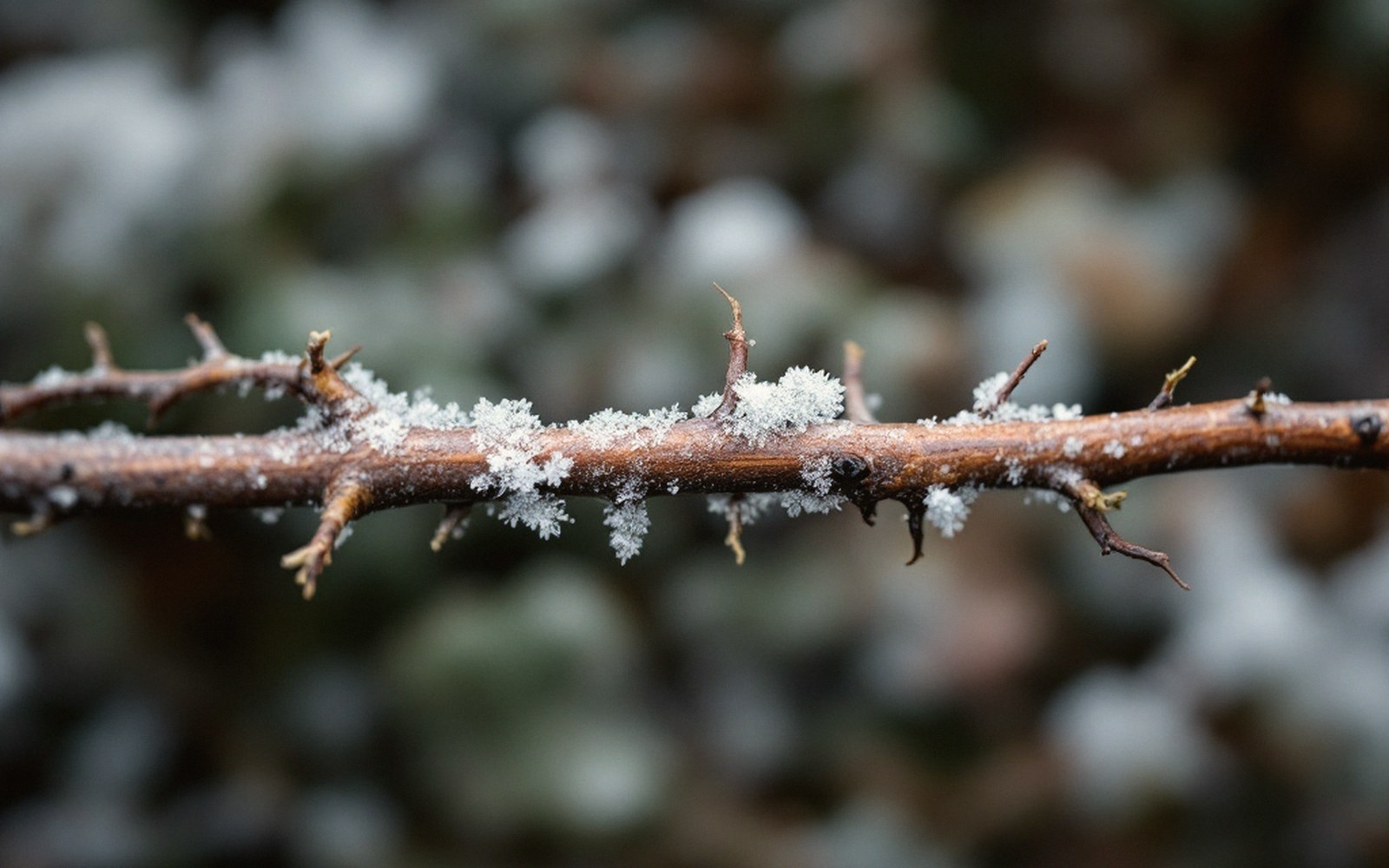
The cold itself changes the work. Wood cut at very low temperatures behaves differently under the blade — it is more brittle, and cuts that would be clean at five degrees Celsius can shatter or leave ragged wounds at minus ten. Some crews will not prune below a threshold, waiting for a milder day. Others continue through hard weather and accept that wound management becomes more important. Either way, the quality of the cut matters: a clean cut heals faster, seals better, and exposes less wood to the air-borne fungi that exploit pruning wounds, of which Eutypa lata and the complex of pathogens grouped under the term grapevine trunk diseases are the most serious long-term threats to vine longevity in cool-climate regions.
January writes the letter; October opens it
There is a particular quality to pruning season that growers tend to describe in similar terms: it is the one moment in the year when the vineyard is most purely a matter of judgment, unmediated by machinery or weather or the rushed decisions of harvest. The vines stand still. The canes are visible from tip to base. There is time, on a cold morning, to think about what happened last summer and what you want to happen next.
The crew moves along the row. A cane is bent to the wire, tied, excess wood removed. A spur is cut back to two buds. Each vine takes a few minutes. Over weeks, the whole block is reset: thinned, shaped, given a number. The work is physical and repetitive, and it is also the most consequential agronomic decision of the year.
When harvest comes in late September or October, the numbers in the bins will trace back, almost exactly, to how many buds were left on a cold morning in January, on wood grown in the summer just gone, by a pruner with secateurs and a working knowledge of what the vine remembers.