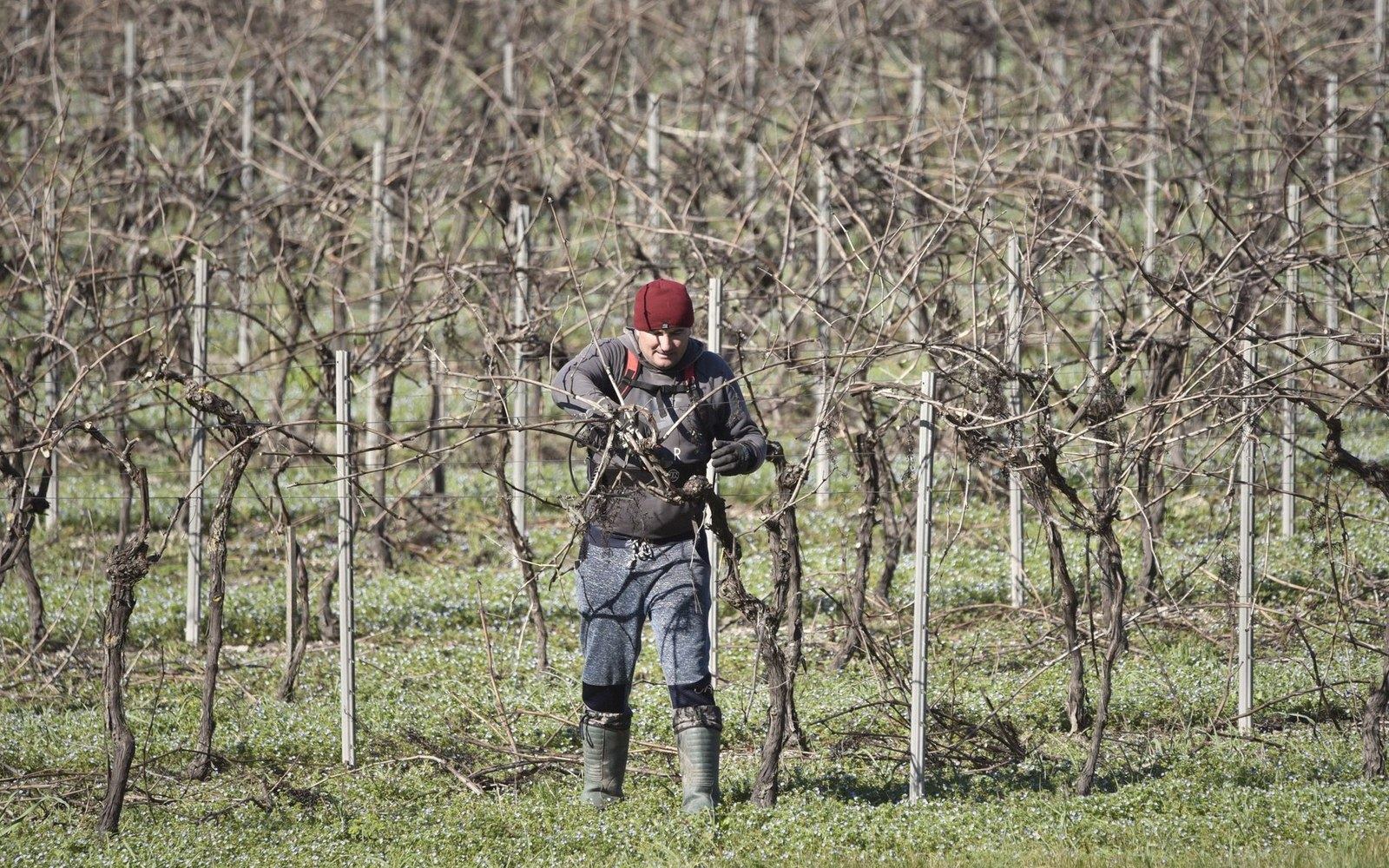
Cane or Spur
The structure left after pruning determines everything about the coming season — and the choice is made before a single bud has broken.
Which structure the vine is left in — long canes tied to the wire, or short spurs on a permanent cordon.
A system that ignores where the variety's fruitful buds sit produces shoots and very little crop.
Two Philosophies, One Vine
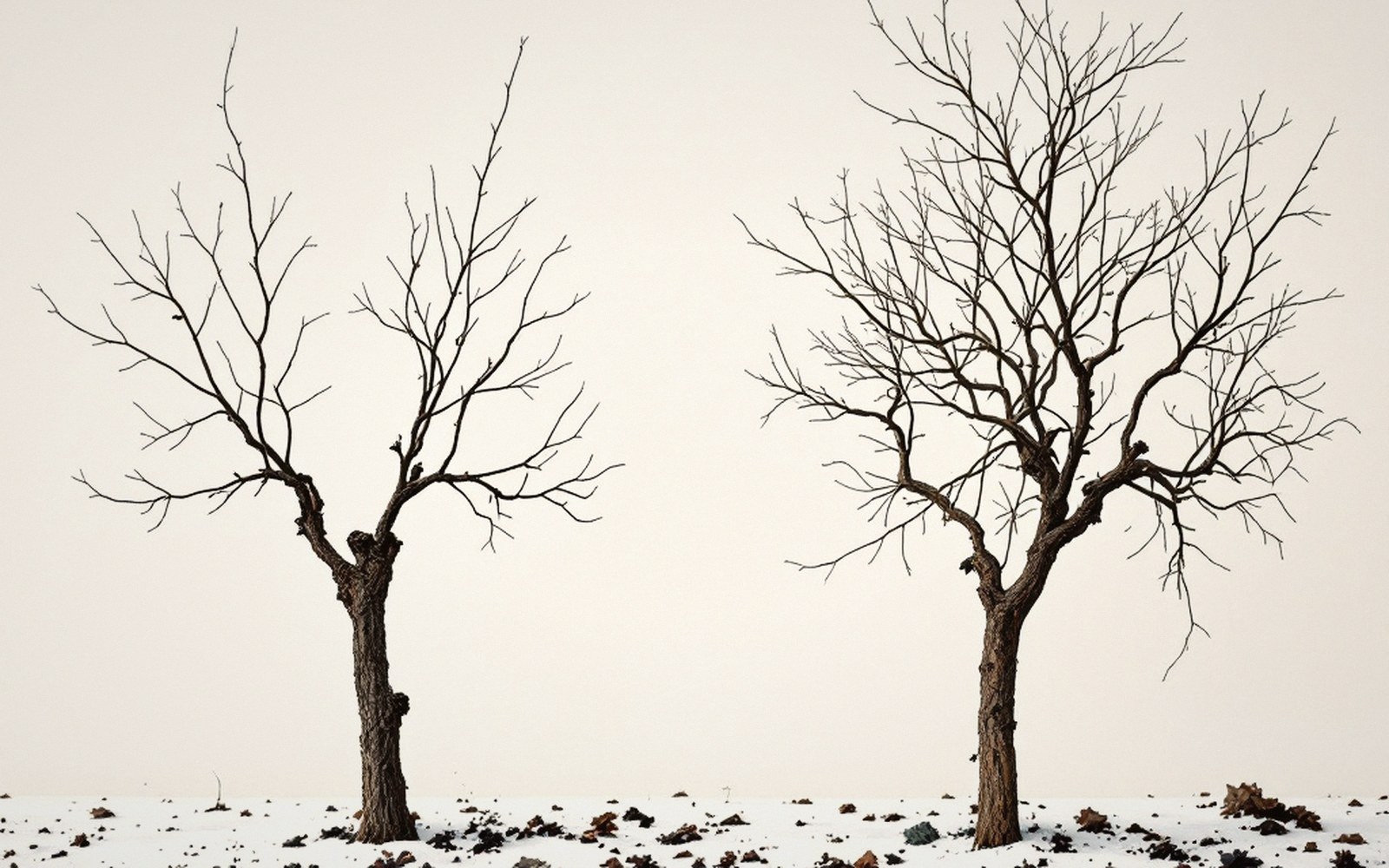
Walk a row in January and the silhouette tells you which system the grower chose. In spur pruning, short stubs of wood — spurs, typically two buds each — are left at regular intervals along a permanent cordon, the horizontal arm that extends from the trunk along the wire. The vine looks architectural, almost orderly. In cane pruning, most of that old wood is removed entirely. The grower selects one or two long canes grown the previous summer, bends them to the wire, and ties them down. The vine looks raw, stripped, renewed.
Both approaches leave buds capable of producing fruit. What they assume about the winter, and about the variety, is different in almost every other respect.
Spur-pruned vines build up a fixed framework over years. The cordon thickens, the spurs lengthen incrementally, and the whole structure becomes permanent. That permanence is useful: pruning is faster, mechanisation is easier, and the vine is predictable from season to season. The tradeoff is that spurs must be kept short — usually two nodes — or the vine rapidly accumulates too much wood and the bud positions creep ever further from the trunk. Some varieties tolerate this well. Grenache and Syrah are often spur-pruned; so are many varieties grown in warmer, drier regions where winter damage is rarely the deciding factor.
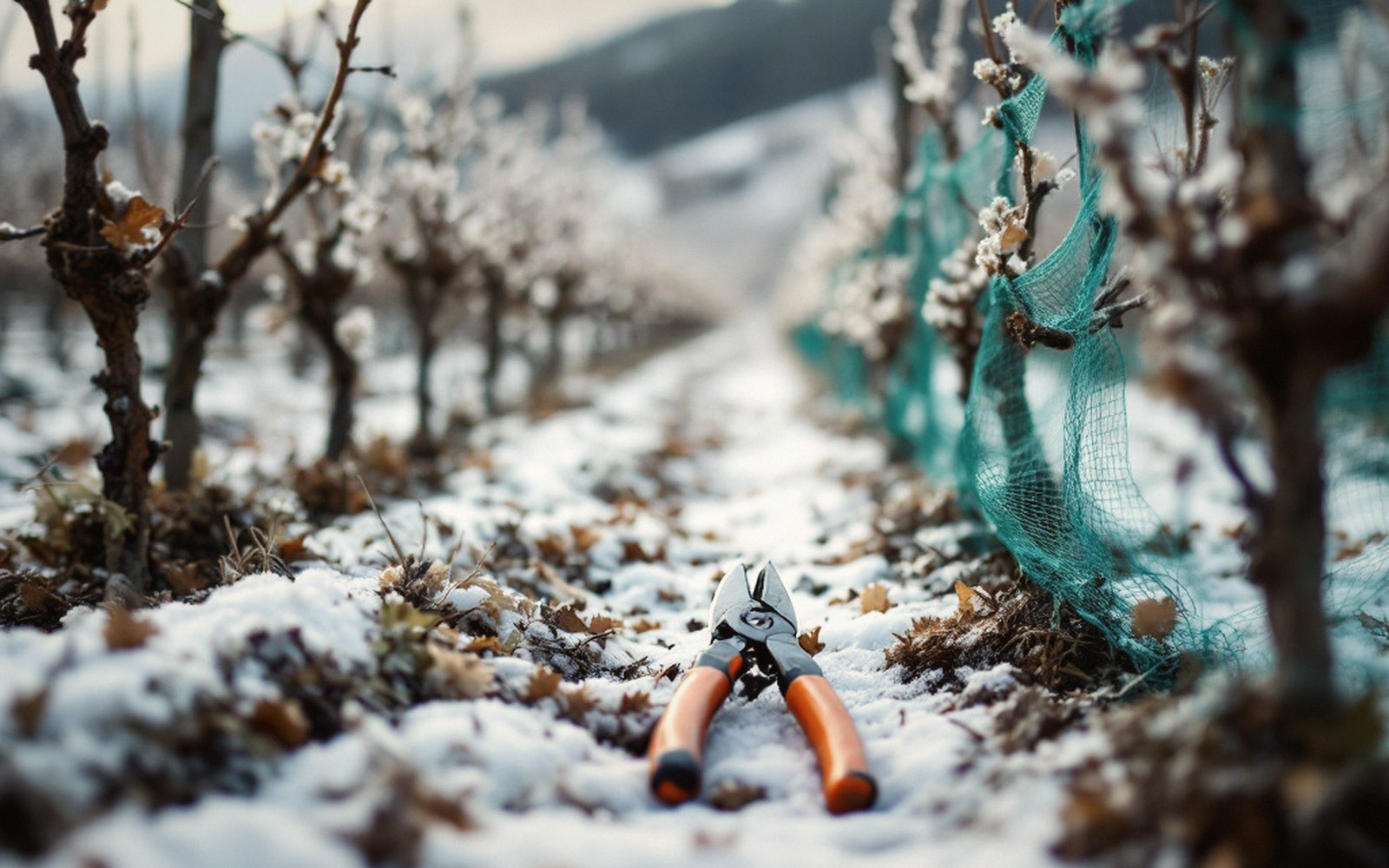
Cane pruning suits varieties whose basal buds — those nearest the base of the cane, closest to the trunk — are poorly fruitful. Pinot Noir and Chardonnay fall into this group. With those varieties, a spur cut to two buds may yield a shoot but little fruit. Leave a longer cane, and the productive buds further along come into play. The cane is spent at the end of the season, cut away entirely, and a new one chosen from the previous summer's growth to replace it.
Cool-climate vineyards under an escarpment face one further calculation. Where winter cold is severe enough to damage canes, the grower may leave a second cane — a renewal spur — as insurance. If the primary cane is killed back, the vine is not lost. It is a hedge built in January, before the worst of the season has arrived.
The tradeoff is that spurs must be kept short — usually two nodes — or the vine rapidly accumulates too much wood and the bud positions creep ever further from the trunk.