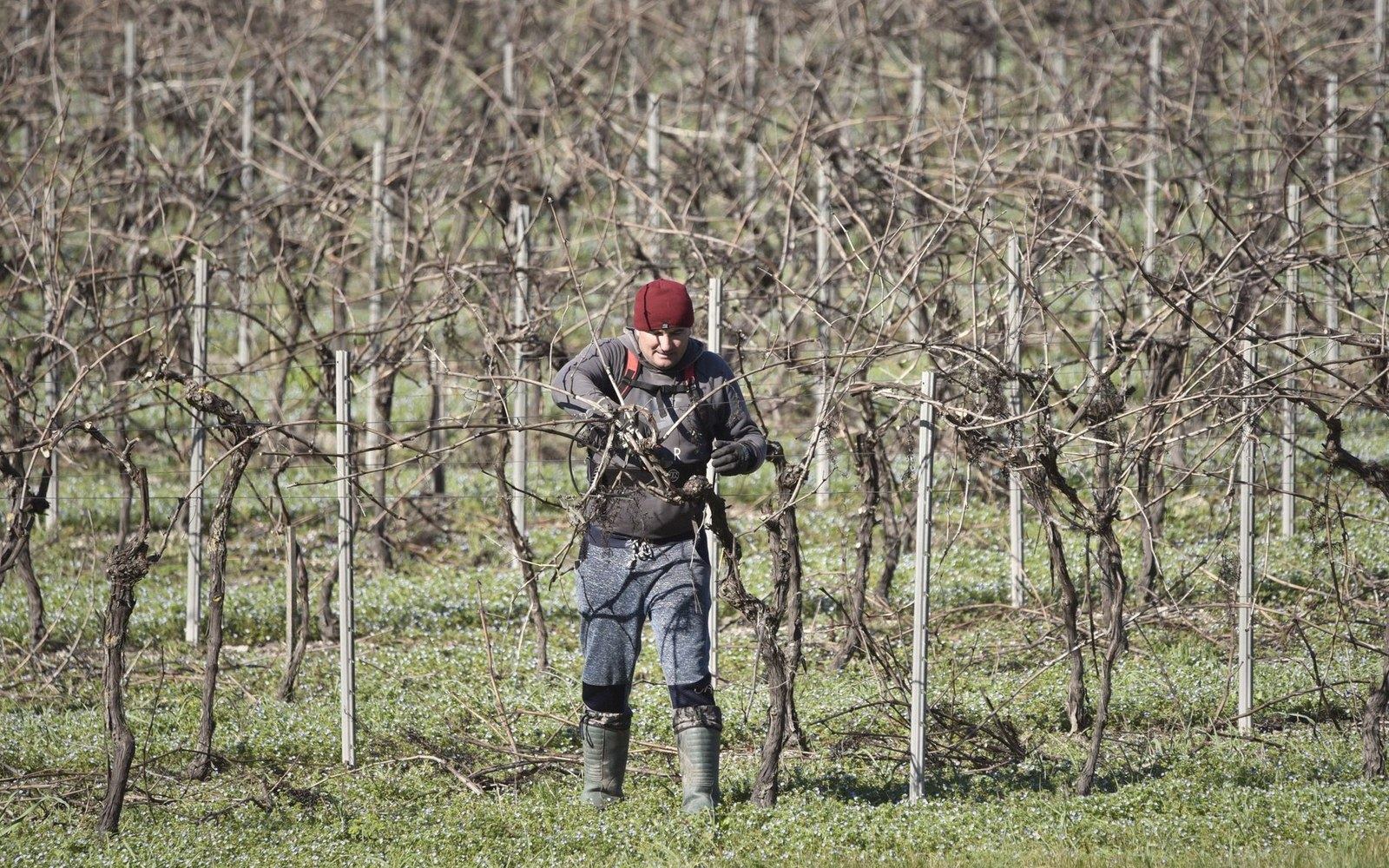
The Frozen Cane
When the temperature drops below zero, the pruning cut changes — and so does the decision about when to make it.
Whether to cut at all on a hard-frost morning, or wait for a milder day.
Wood cut too cold shatters, and a ragged wound is an opening for trunk disease.
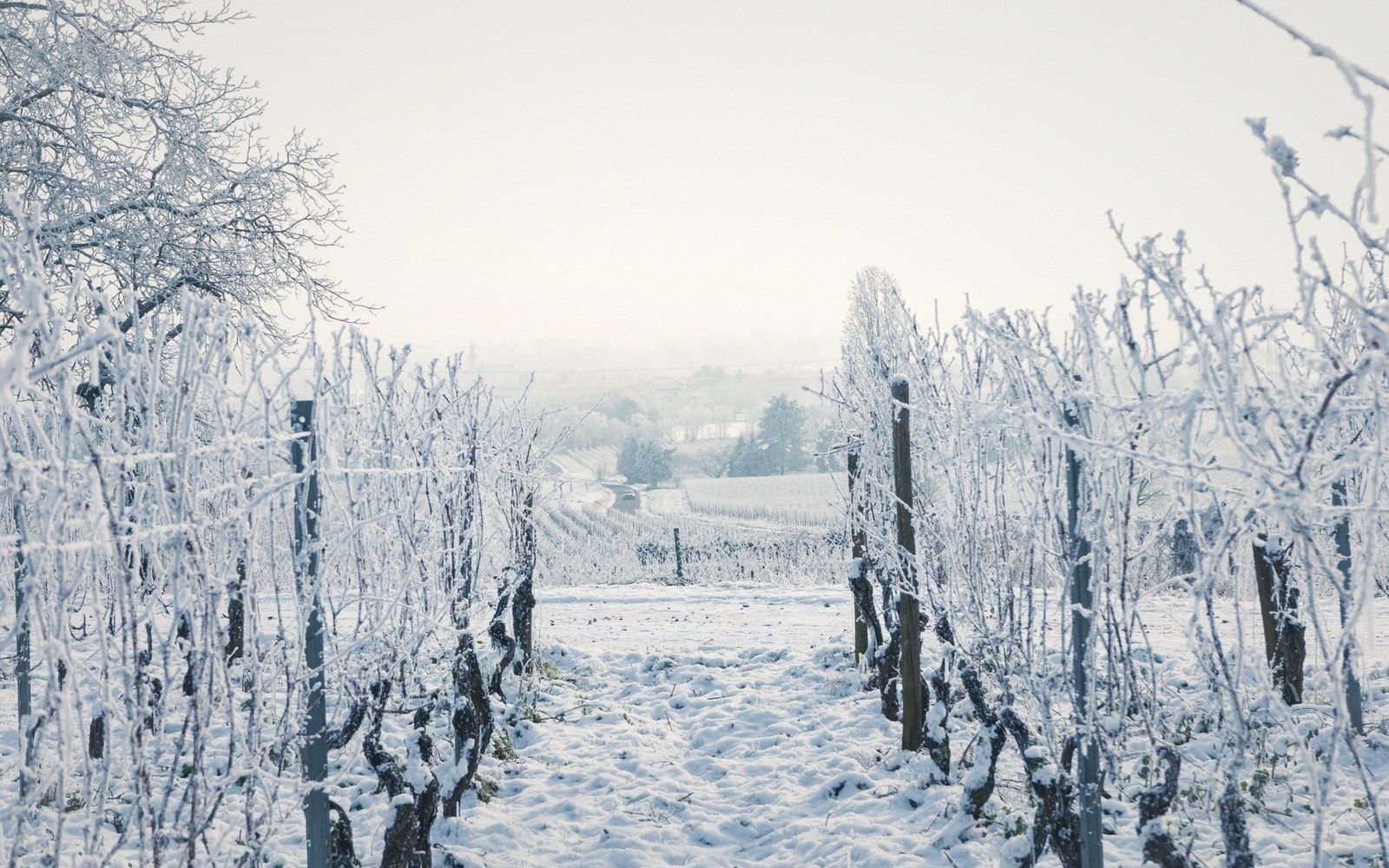
Cutting Cold
There is a version of winter pruning that happens at minus ten, because the calendar says January and the calendar does not care about the thermometer. The wood comes off cleanly enough, but cleanly is not quite the right word for what frozen cane does under a blade.
Green wood, even dormant wood, holds moisture. When that water freezes, the tissue becomes brittle in a specific way: the outer bark and the pith contract at slightly different rates, and the whole cane is under internal tension before the secateur closes on it. Cut a frozen cane and the wood can shatter rather than shear. The blade that makes a smooth angled cut at five degrees Celsius makes a fractured one at minus ten — ragged edges that dry unevenly and leave a larger wound surface exposed to the air. Larger wound, slower callusing, longer window for fungal entry.
Eutypa lata and the botryosphaeria complex — the pathogens behind the trunk diseases that slowly hollow a vine — need exactly that window. They are not lurking only in rain; dry winter air over a rough cut is enough to desiccate the cambium before callus tissue can form. Growers who prune routinely in hard frost find more dieback in their older blocks, though causation is difficult to isolate from other variables. The correlation is consistent enough to take seriously.
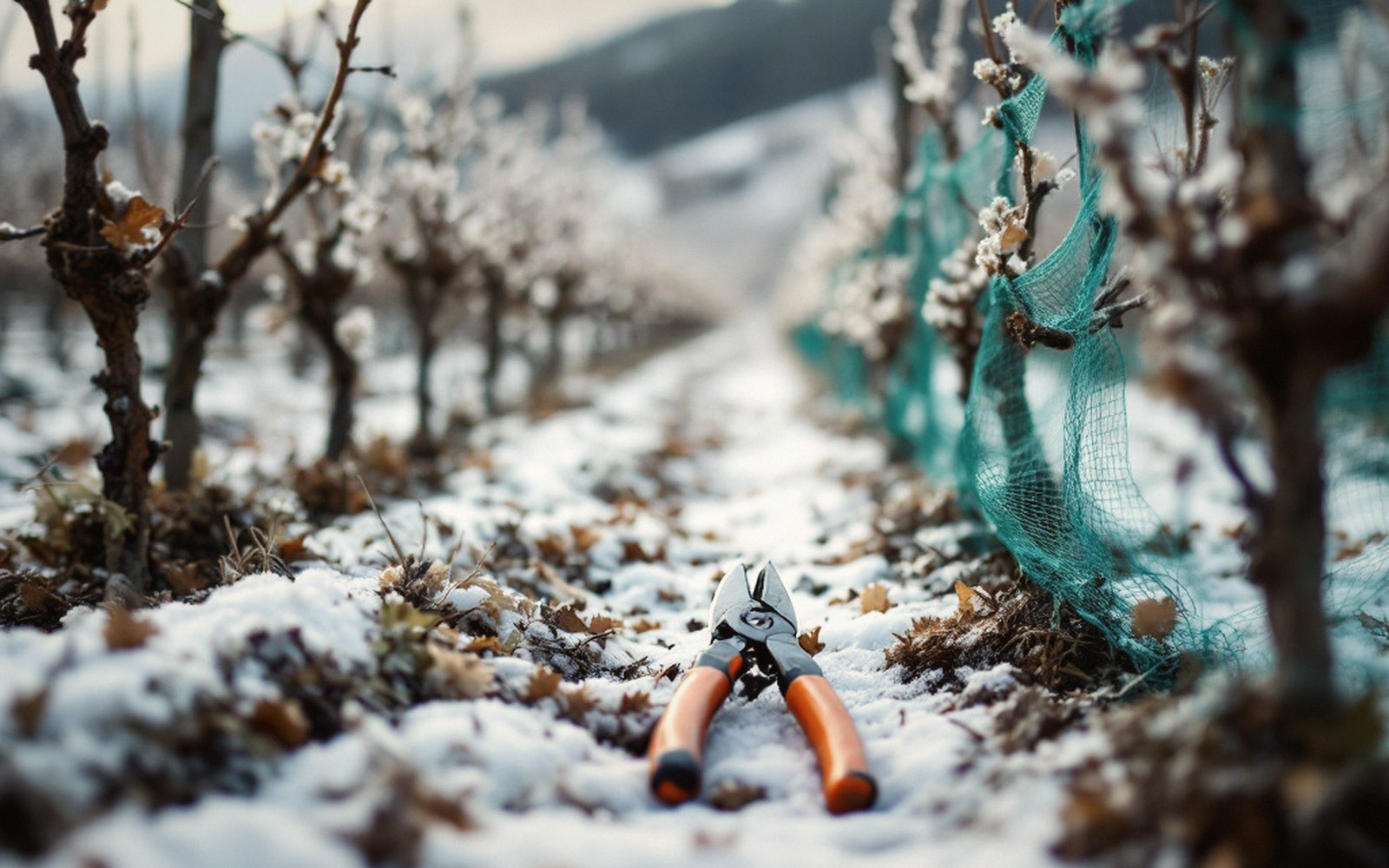
The practical response is straightforward: wait. A week of hard frost passes. The daytime temperature lifts above zero, the wood warms through, and the same cane that would have shattered in the morning cuts properly by early afternoon. Nothing is lost except a few days, and pruning is already a task that runs from December into March in most cool-climate vineyards. There is time to choose the better day.
Where there is no choice — where labour is committed, where a block must be finished, where the cold simply will not break — the cut can be moved further back along the cane, leaving a longer stub beyond the last retained bud. The stub weathers the winter badly; it dies back, as stubs do. But it absorbs the frost damage that might otherwise track into live wood. It is removed with a second, lighter pass once temperatures recover.
There is a version of winter pruning that happens at minus ten, because the calendar says January and the calendar does not care about the thermometer.
The vine records every cut. Pruning is, structurally, next year's crop — but it is also, wound by wound, the cumulative health of the trunk. A frozen cane is not a reason to stop work. It is a reason to read the thermometer before you pick up the secateurs.