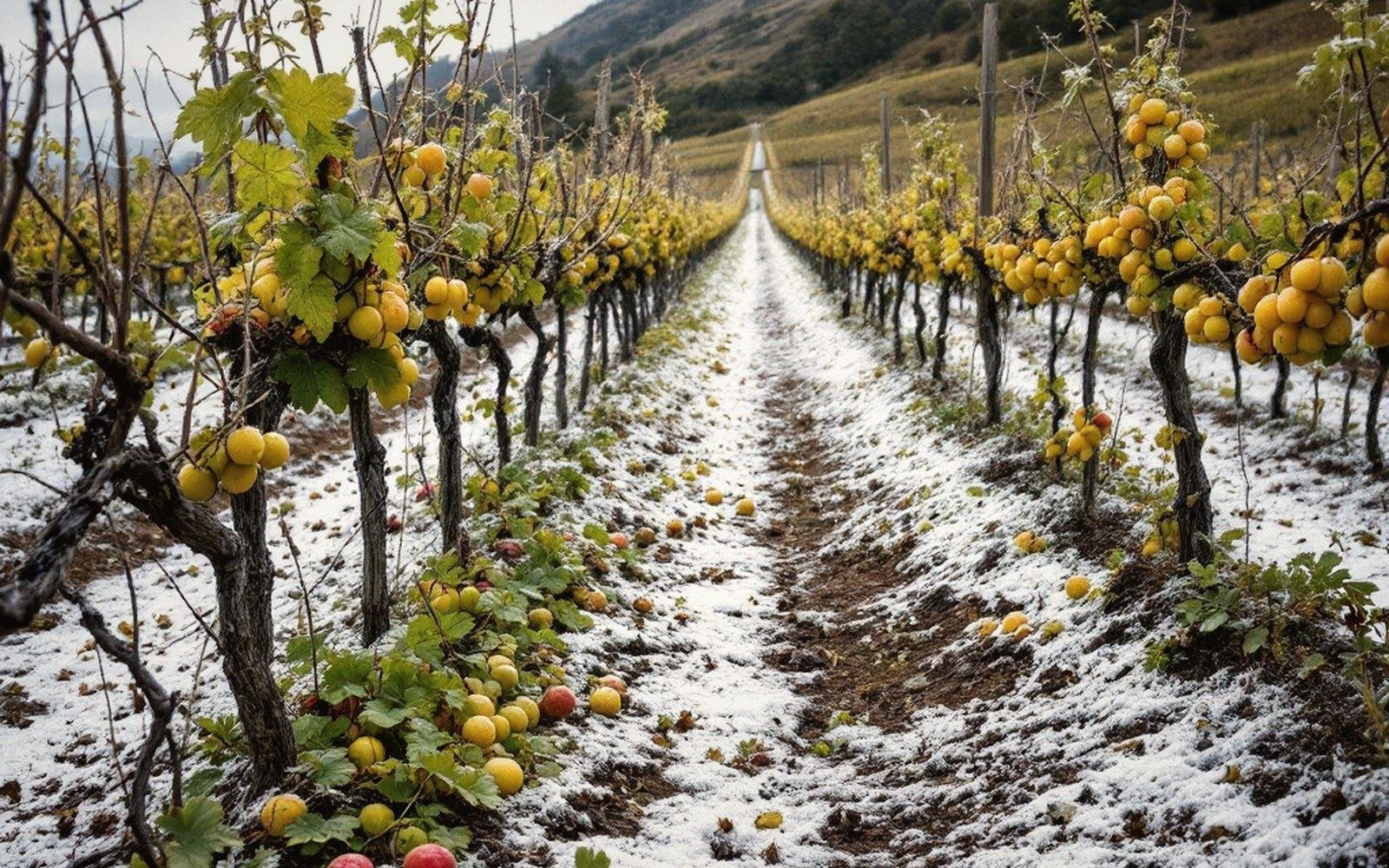
Uneven Ripening
Two bunches on the same vine can be weeks apart. Here is why.
Whether the block comes off in one pass, or is split by ripeness.
One pass through an uneven block puts green fruit and overripe fruit into the same load.
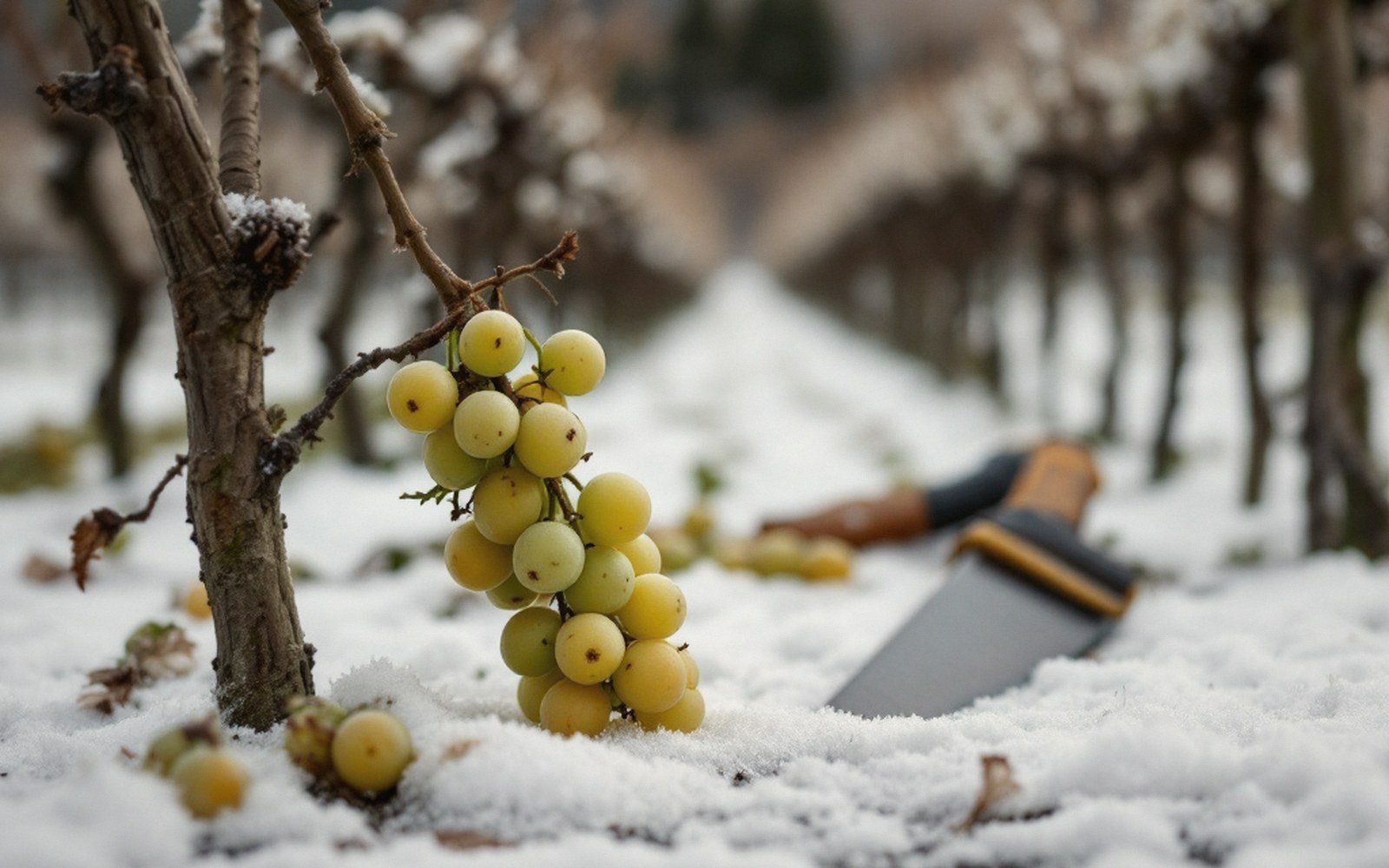
The vine does not ripen in unison
Stand in a block at veraison — the moment when berries soften, colour, and begin accumulating sugar — and you will see it immediately: one bunch already translucent and yielding, the next still green and hard as a pea. They hang from the same wood, fed by the same roots. The gap is real, and it has causes worth understanding.
Position in the canopy is the first one. A bunch near the top of the shoot, close to actively growing shoot tips competing for photosynthate, gets less. A bunch lower down, nearer the trunk and further from the terminal meristem, is in a better queue. The plant's internal economy — the movement of sugars from leaves to fruit — runs along gradients, and not every bunch sits at the same point in them.
Shoot vigour compounds this. A vine carrying one excessively vigorous shoot will push resources into that shoot's tip long after neighbouring shoots have slowed and redirected carbon to fruit. This is the core tension: the canopy is the engine, but an engine running too hard keeps burning fuel that could have gone to ripening. Summer hedging and shoot thinning are partly aimed at forcing that redirection, but they work unevenly across a vine.
Fruit set in late spring adds another layer. If a cluster set poorly — if some flowers were not fertilised, or if coulure stripped the bunch — the remaining berries may have started development on a slightly different clock. A loose, uneven bunch often ripens patchily for exactly this reason: its individual berries did not all begin at the same moment.
Light exposure matters too. A bunch on the shaded interior of a dense canopy experiences cooler temperatures and lower photosynthesis from its own exposed leaves nearby. Leaf plucking opens the fruit zone deliberately, but even after thinning, some bunches will be better situated than others. Aspect within the row — which side of the canopy faces the afternoon sun — can put two adjacent clusters in meaningfully different microclimates.
A vine carrying one excessively vigorous shoot will push resources into that shoot's tip long after neighbouring shoots have slowed and redirected carbon to fruit.
At harvest, this unevenness forces a choice. Pick when the forward bunches are ready and the lagging ones are not yet there, or wait and risk the first bunches softening past the point of freshness. In a hand-picked block, pickers can leave the green clusters for a second pass. In a mechanically harvested block, the vine comes off in one sweep, which is why uneven ripening matters more in a vineyard running a machine. Managing the conditions that cause it — canopy density, vigour, set — is, in the end, summer work that determines how hard that harvest choice has to be.