Netting
The moment colour breaks, the competition begins.
When the nets go on, and how tightly they are closed under the fruit.
A gap or a loose tie is a week's damage: birds strip from the top of the slope down.
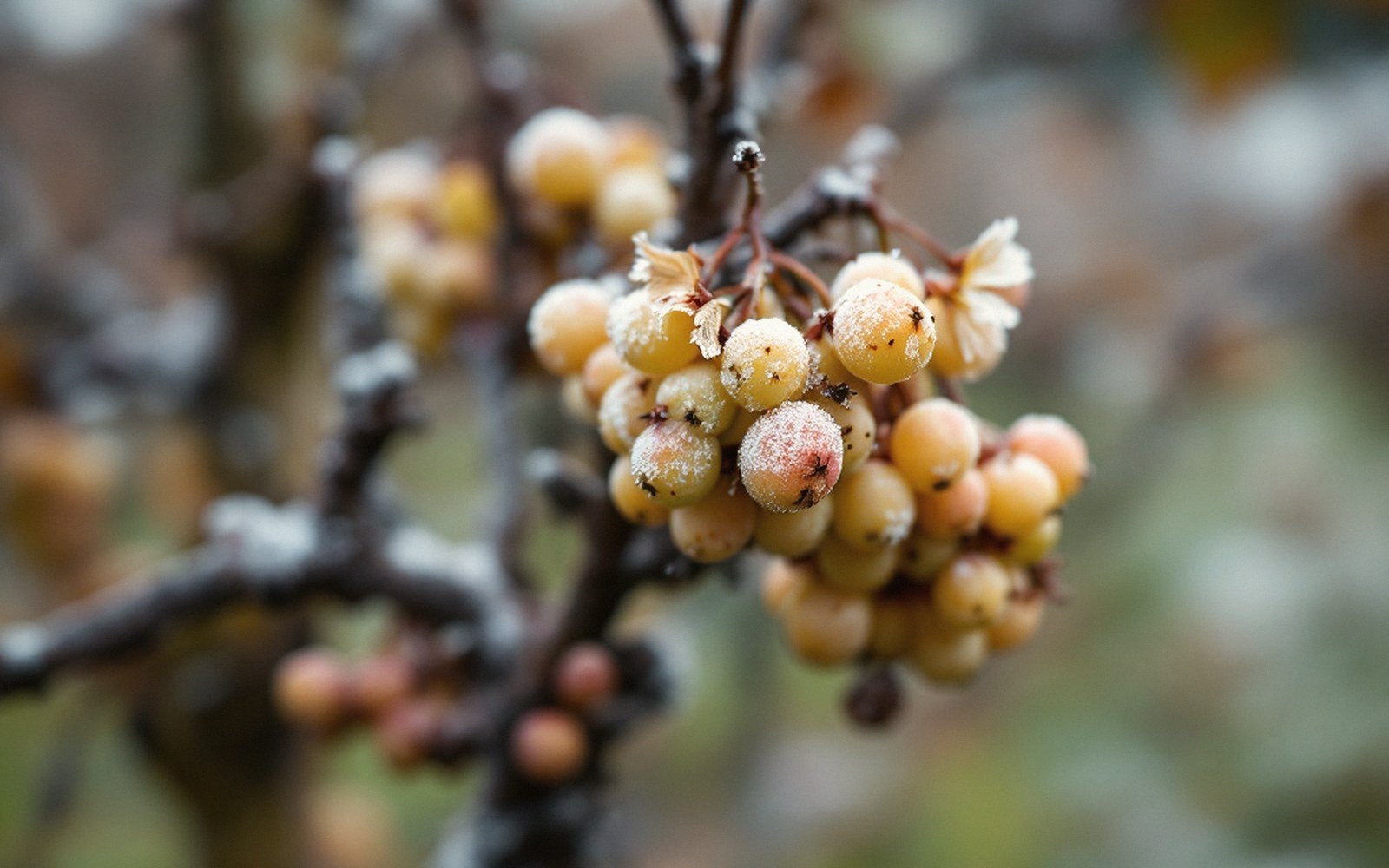
Veraison is not a quiet event. Within days of the first berries softening and flushing to red or gold, every bird in the neighbourhood knows the fruit is changing. Starlings, sparrows, thrushes, waxwings — the species vary by region, but the pattern does not. They do not wait for full ripeness. They arrive the week the sugar rises, and they keep arriving until there is nothing left to take.
When the Nets Go On
Timing is everything. A grower who waits for a critical mass of colour before netting will already have lost berries, and once birds find a row they return to it. The practical rule is simple: nets go on at the first sign of veraison, not after it is well underway. In a block where ripening is uneven — earlier on the south-facing end, later where the canopy is thicker — that means netting in passes, working ahead of the colour rather than behind it.
There are two common configurations. Drape netting is thrown over the top of the canopy and tucked or clipped at the base of each row, enclosing the fruit zone entirely. Side netting is fastened to the trellis wire and runs along the fruiting zone rather than over the whole canopy, which is faster to apply and remove but leaves gaps at the top that starlings, in particular, exploit quickly. For most cool-climate vineyards handling significant bird pressure, full drape nets are the safer choice despite the extra labour.
The nets themselves are a UV-stabilised polypropylene mesh, typically with a diamond aperture small enough to exclude sparrows — roughly fourteen millimetres or less. Colour matters in one practical sense: darker nets are easier to inspect against pale sky for damage, but lighter nets retain less heat around the fruit, which can matter late in the season when growers are trying to hold sugar accumulation without scalding exposed berries.
A grower who waits for a critical mass of colour before netting will already have lost berries, and once birds find a row they return to it.
Damage happens fast. A single morning of unprotected fruit in a block under starling pressure can mean a measurable percentage of the crop gone or rendered unusable by skin punctures that invite rot. Netting is not optional in most vineyards below the treeline or near waterways; it is a fixed cost of bringing the harvest in.
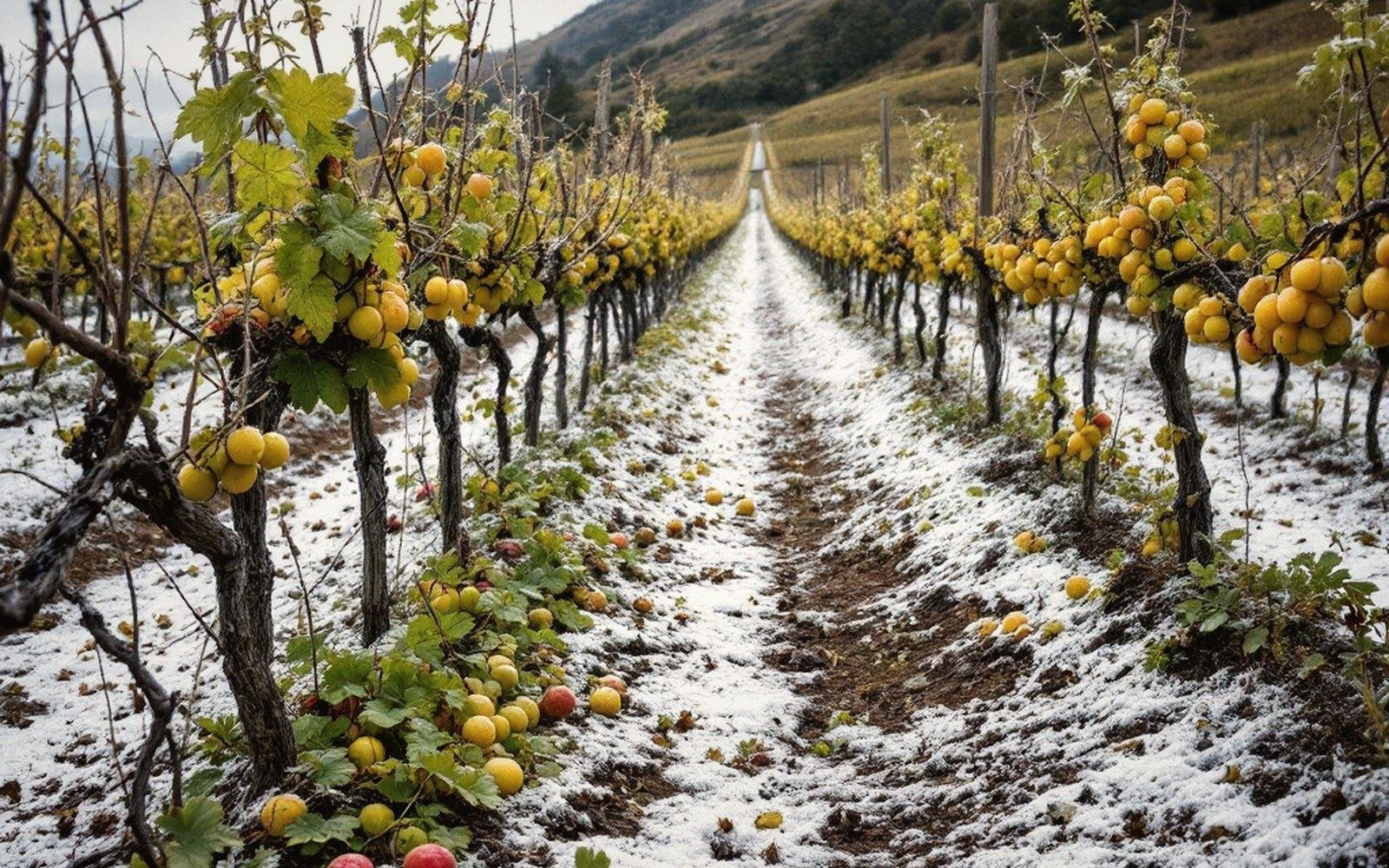
Nets come off only when the fruit does. The exception is fruit left hanging into winter for an ice wine harvest, where specialised, tighter nets stay on through frost season, holding the crop against both birds and the wind.