Waiting for minus eight
The fruit has been hanging for weeks. The nets are still up. The only thing left to do is watch the thermometer.
Whether to keep waiting, or write the block off for the year.
Pick above the threshold and the water does not stay behind as ice, which was the entire point.
The window that has to close
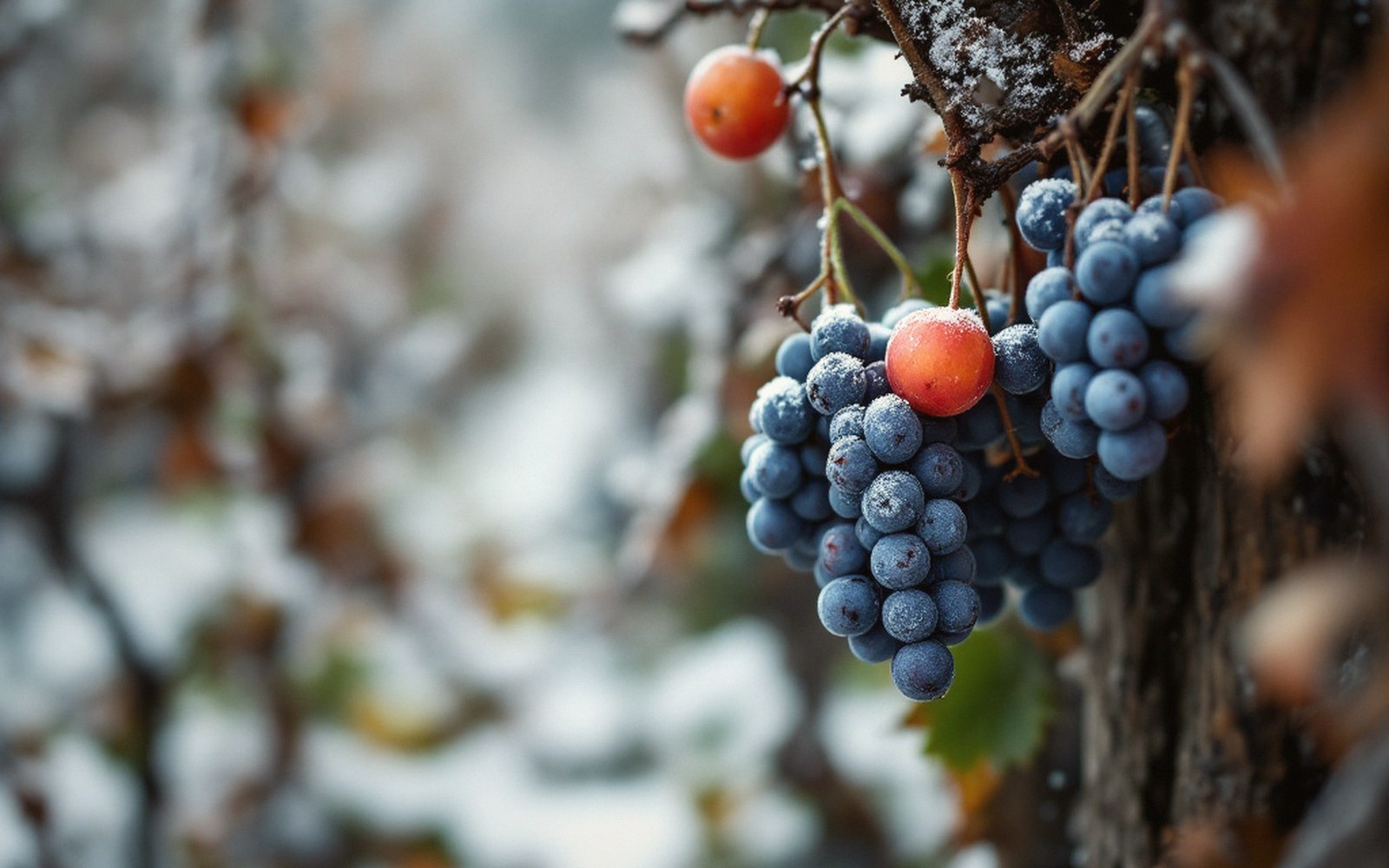
After the main harvest is done and the cellar is full, most vineyards go quiet. In the blocks set aside for late-winter ice wine, they do not. The fruit stays on the wire through October and into November, then December, exposed to whatever the season brings. The nets that went up against the birds before veraison are still in place, because the starlings and waxwings that arrive in late autumn are just as interested in concentrated, sugar-heavy berries as anything that came in August.
The target temperature in most cool-climate jurisdictions that regulate ice wine production is minus eight degrees Celsius, sustained long enough that the fruit freezes completely through to the seed. In Canada, where the style was formally codified, the Vintners Quality Alliance requires that the grapes be picked and pressed at minus eight or colder. That is not a guideline; it is the floor below which pressing must begin. The standard exists because the physics of the process depend on it: water freezes before the dissolved sugars do, and the colder the fruit, the more water remains behind as ice in the press and the more concentrated the juice that runs free.
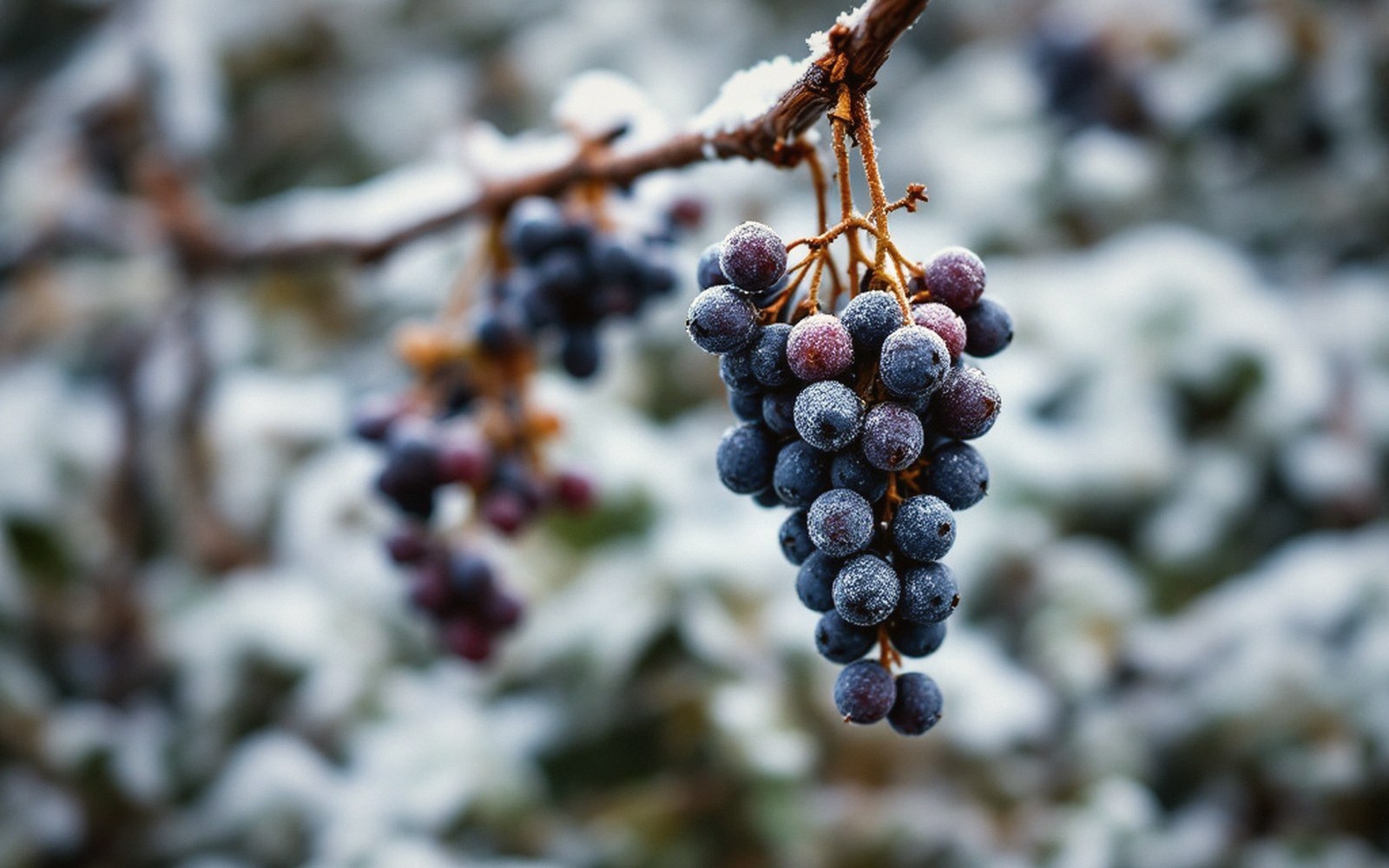
Minus eight sounds like a modest target until you have spent three weeks watching the forecast tick between minus four and minus six without ever arriving. The nights that almost qualify are the ones that wear a grower down. The temperature drops after midnight, holds for an hour, then lifts again before dawn as cloud moves in or wind shifts direction. The fruit weathers another cycle and you go back inside to reload the weather app.
What the waiting does to the fruit
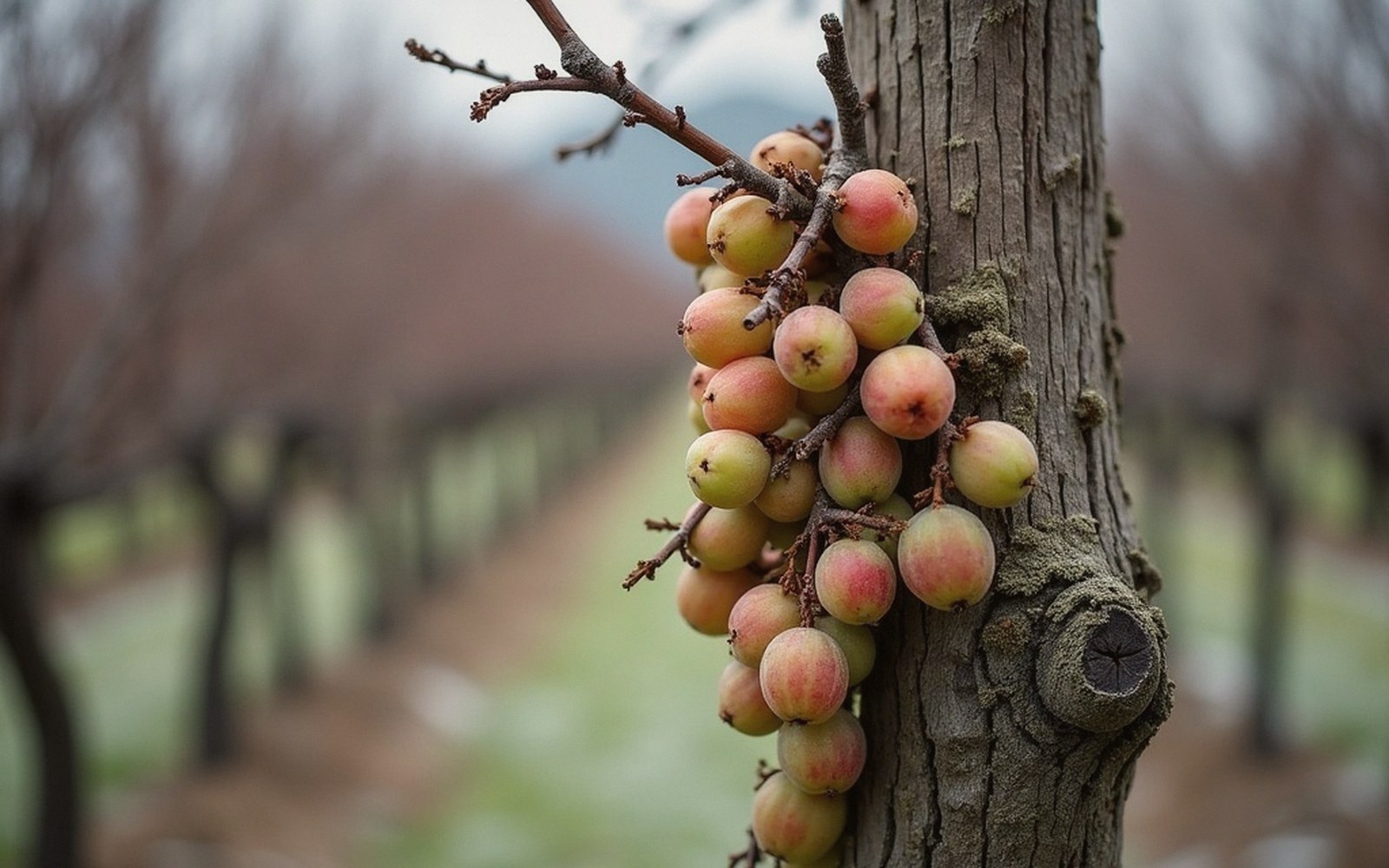
The weeks between the main harvest and a hard frost are not neutral time. The berries dehydrate slowly as moisture moves out through the skin, concentrating sugars and acids further than they were at picking. Some fruit shrivels to raisins. Some develops noble rot — Botrytis cinerea, the same fungus managed carefully in Sauternes and Tokaj — if the autumn was wet enough before the cold came. A small amount of botrytis is tolerated or even welcomed; too much collapses the berry's structure and the juice runs before the press has a chance to do its work.
What survives best is thick-skinned and tightly clustered enough to resist the repeated wet-dry-cold cycles without splitting. Varieties like Vidal, bred for exactly this kind of endurance, have earned their place in ice wine programs in part because their tough skins hold up where something more delicate would have fallen apart by November. Riesling, the other classic choice, rewards the wait differently — its thin skin is a liability in a wet autumn but the aromatic intensity it brings to the frozen press makes the risk worth calculating.
Through all of this the nets stay up. A heavy snowfall can flatten them onto the canopy and has to be cleared by hand before the weight breaks wires or canes. Deer push through net edges if the stakes are not driven firmly. The vineyard that looked finished in September is still a daily obligation.
A small amount of botrytis is tolerated or even welcomed; too much collapses the berry's structure and the juice runs before the press has a chance to do its work.
The pick itself
When the forecast finally shows a night that will hold at minus eight or colder, and the grower is confident enough in it to commit, the picking crew is called for the hours before dawn. The work has to happen while the temperature holds. Gloves make the hands clumsy, and hands that are bare go numb in twenty minutes, so the crew rotates in short shifts. The frozen clusters crack off the cane rather than pulling; the sound is different from any other harvest night, a dry snap rather than the soft give of ripe fruit in autumn.
Everything moves quickly to the press, which runs while the fruit is still hard. The pressing of frozen fruit is slow — a single pressing can take several hours — and the yield of free-run juice is a fraction of what a table-wine harvest produces. That is precisely the point. The small quantity of intensely sweet, high-acid juice that emerges is the reward for everything that was left on the wire, watched and waited for, through the long weeks between one harvest and the next.
This site is an independent publication about viticulture. It is not a winery, retailer or tour operator and has no connection to any commercial producer.