Pressing Frozen
When the fruit goes in hard, what stays behind is water — what comes out is everything else.
How hard and how long the frozen fruit is pressed, and how cold the room stays.
Let the load warm and the ice melts back into the juice, taking the concentration with it.

The Ice Does the Work
Conventional pressing squeezes juice from soft, ripe fruit. Ice-wine pressing runs the logic differently: the water in the berry has frozen solid, and the press forces out only what cannot freeze at that concentration — a dense, viscous juice laden with sugar, acid, and flavour compounds. The ice stays behind in the press cake. That separation is the entire point.
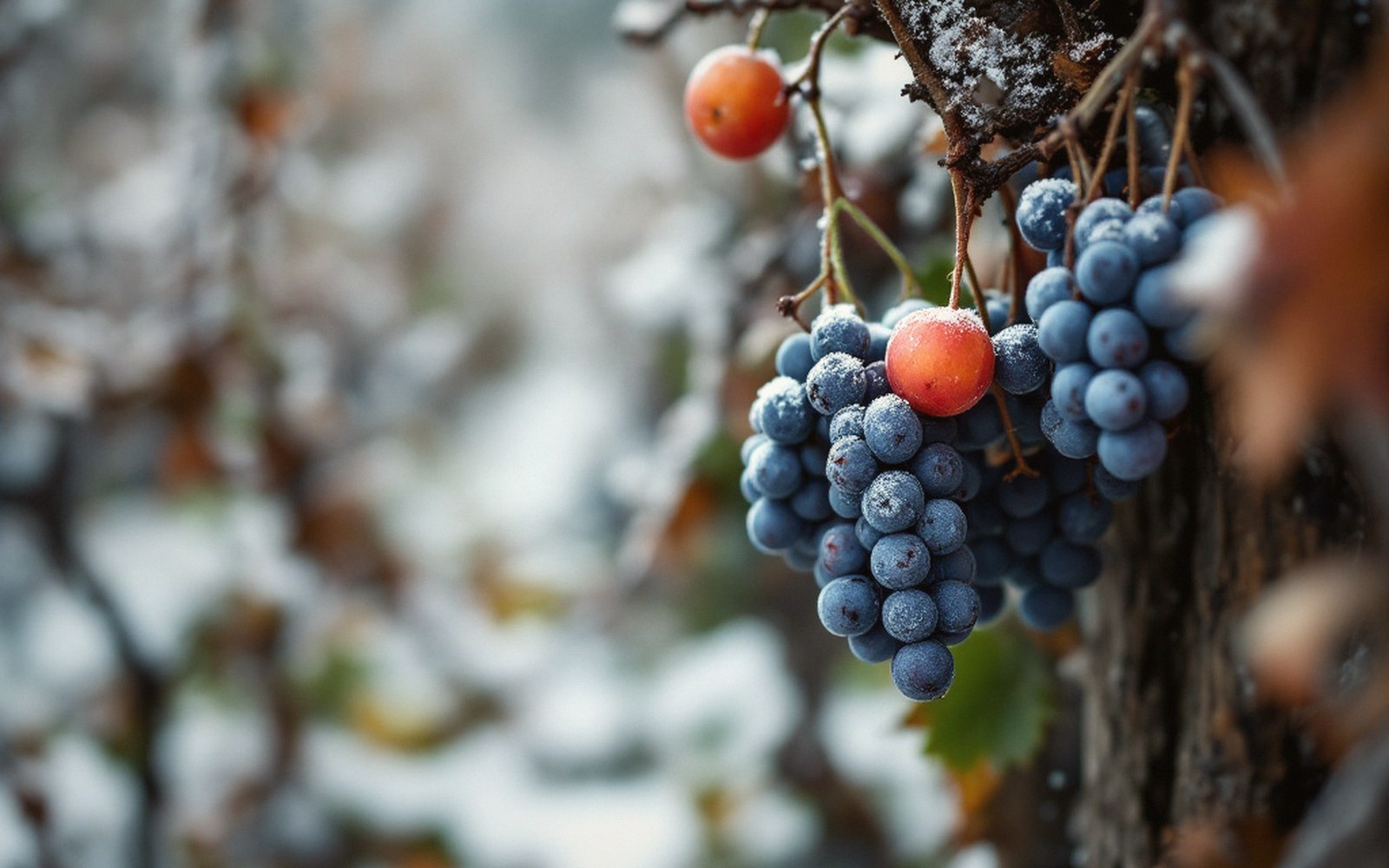
The fruit arrives from the block still hard, typically after a night pick begun well below −8 °C. The window is narrow. If the clusters warm before pressing begins, the ice melts back into the juice and the concentration is lost. Speed between vine and press matters, but temperature matters more — the sorting area, the receiving hopper, and wherever possible the press itself are kept cold.
Pneumatic bladder presses handle frozen clusters reasonably well; older basket presses have also been used, though the sheer resistance of frozen fruit puts mechanical stress on older equipment. Pressure is applied slowly. The first fraction to emerge is the most concentrated — intensely sweet, sometimes almost syrupy — and as pressure increases, successively less concentrated fractions follow. Some operations keep these fractions separate, blending afterward; others run the whole pressing as a single lot.
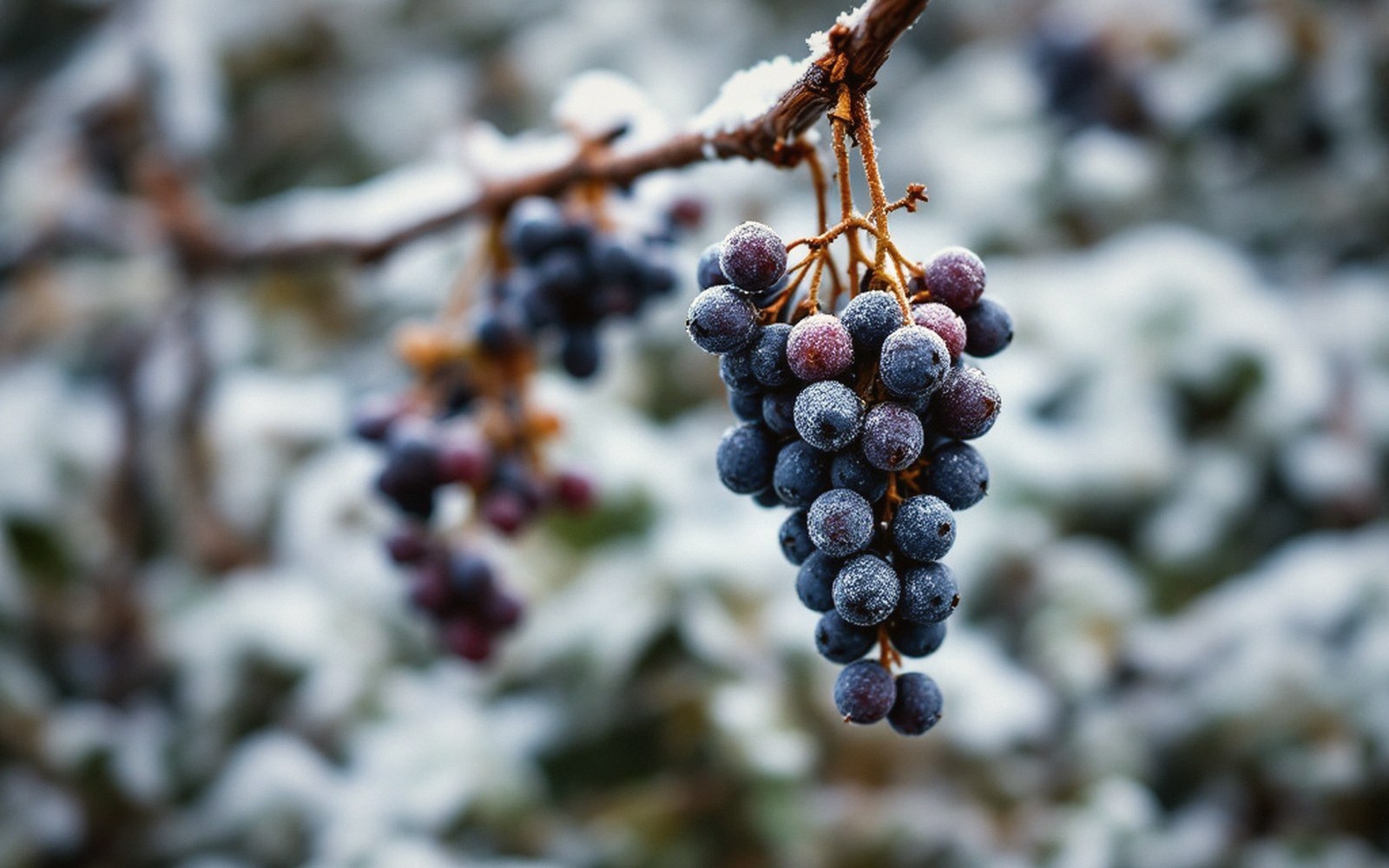
Yield tells the story plainly. A normal pressing might extract somewhere around 70–80 percent of the berry's juice by weight. Frozen pressing, depending on how cold the fruit is when it enters the press, can drop that figure to 15–20 percent or lower. A tonne of frozen grapes yields a small fraction of what a tonne of fresh grapes would. That ratio is the principal reason ice-wine production is so costly, and why the volumes are tiny even on estates that manage it every year.
The juice that does emerge goes into tank or barrel carrying sugar levels that can exceed 35–40 Brix — far above what any yeast can fully ferment. Fermentation is slow, often months long, and typically arrests naturally at high residual sugar. The result is stable not because it is fortified but because the remaining alcohol and sugar together leave insufficient water for microbial activity to continue.
The first fraction to emerge is the most concentrated — intensely sweet, sometimes almost syrupy — and as pressure increases, successively less concentrated fractions follow.
The press itself needs cleaning carefully after a frozen run: the cake that remains is dense and sticky once it thaws, and the drainage channels that work fine with ordinary pomace can block. Cold-weather pressing also demands that pumps, hoses, and fittings are checked for ice formation before any liquid moves. These are not complications of the wine — they are complications of working in winter, at night, against the clock.
This article is a general overview of how frozen grapes are pressed for ice wine.