What Hangs On
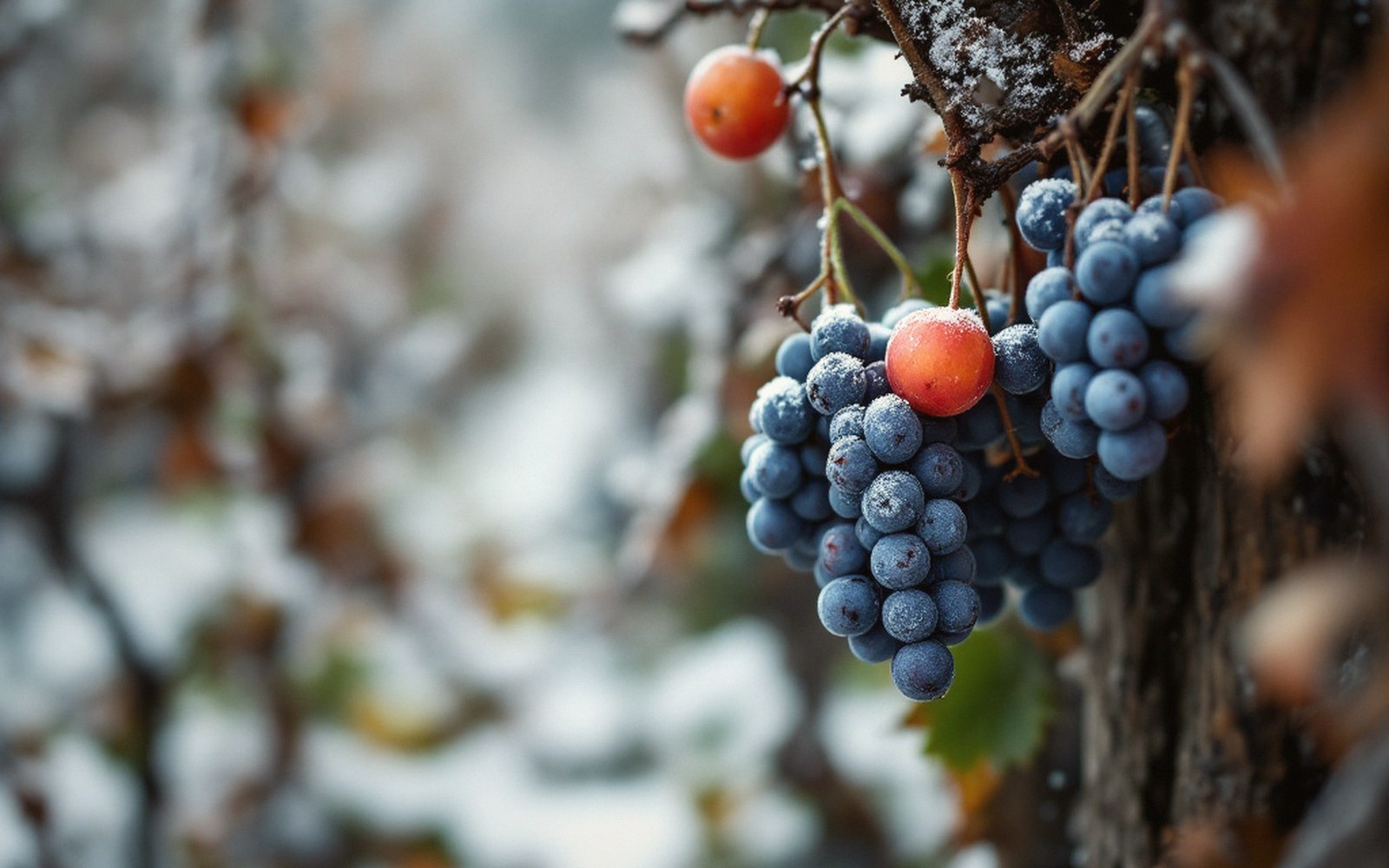
Not every variety is built for the long wait. Skin, cluster architecture and rot resistance determine what is still worth pressing in December.
Which varieties and which blocks are left out for the freeze.
Loose bunches and thin skins do not last to December, whatever the forecast does.
The Vine Selects Itself
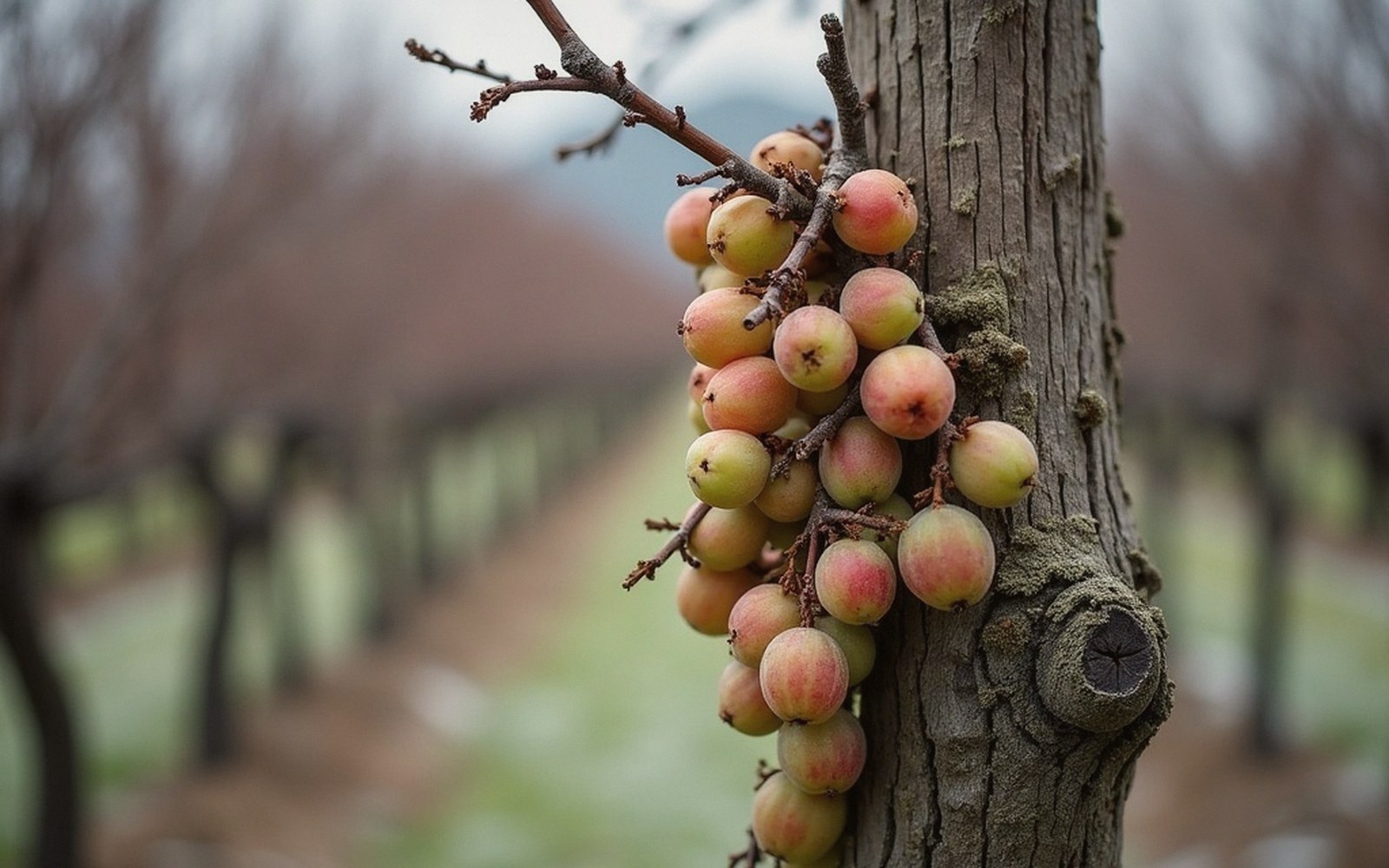
By the time harvest is done and the last tractor has left the row, the fruit that remains on the wire is already under pressure. Temperatures swing. Autumn rain arrives. What survives into genuine freeze weather is less a matter of grower choice than of variety — specifically, of how a bunch is built and how its skin performs under repeated wetting and drying over six or eight weeks.
Loose-clustered varieties with thick skins have an immediate advantage. Air circulates between berries; moisture does not sit. A tight, thin-skinned cluster — the kind that bruises under a thumbnail — begins to split as the berries plump with rain, and once the skin breaks, Botrytis cinerea moves fast. Noble rot in controlled form is one thing; aggressive grey rot running through a dense bunch is another, and it will hollow a cluster before the first hard frost arrives.
Riesling is the variety most associated with the long hang in cool climates, and its structure explains much of that reputation. The berries are small relative to their skins, and while the clusters can be moderately compact, the skin itself is tough and waxy enough to resist casual puncture. It shrivels rather than splits, concentrating sugar as water is lost to evaporation and — under the right conditions — to botrytis dehydration. Vidal, a French-American hybrid widely planted in Canada's ice wine regions, carries this further: its skin is markedly thick, a trait that allows it to hang well past Thanksgiving and still arrive at the press structurally intact.
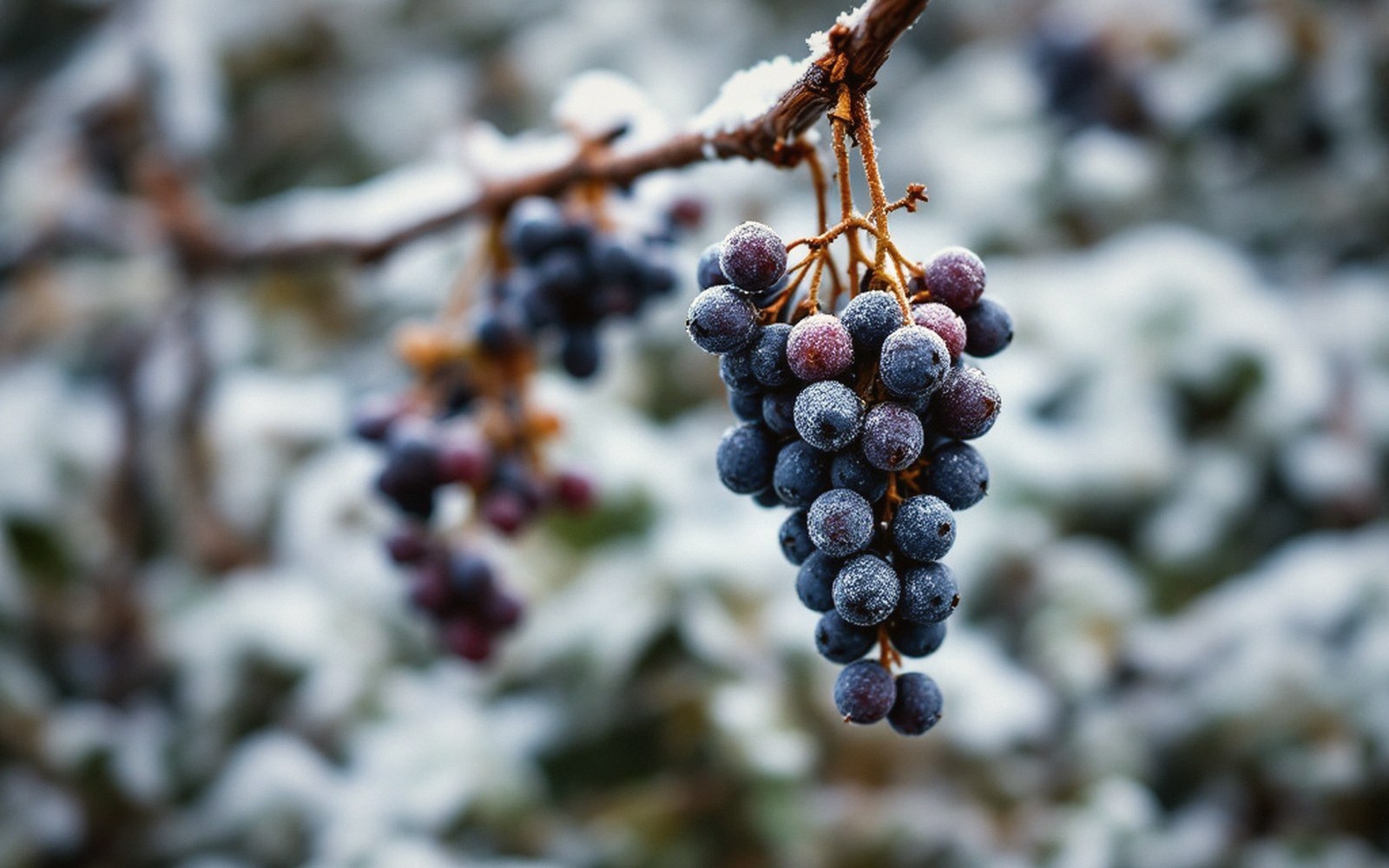
Gewurztraminer presents the opposite case. The skin is thin, the berry prone to splitting, and the cluster compact enough that rot pressure builds quickly once warm wet weather lingers into autumn. It can produce extraordinary late-harvest wine in dry years, but it is not a variety to leave hanging on the speculation that a freeze will arrive on schedule.
Phenolic ripeness matters too. Green, unripe tannins in the skin break down differently under freeze conditions than fully mature ones, and the resulting press juice can carry a bitterness that no amount of residual sugar entirely masks. A grower leaving fruit for ice wine is not simply waiting for the thermometer to fall; they are watching whether the fruit is mature enough in the first place to reward the wait.
Noble rot in controlled form is one thing; aggressive grey rot running through a dense bunch is another, and it will hollow a cluster before the first hard frost arrives.
What survives to December, then, is a compound result: the right variety, grown to genuine ripeness before harvest, in a season that has not delivered enough rain to tip the balance toward rot. The freeze is the last condition, not the only one.