The Night Pick
Picking in the dark because the temperature will not hold past dawn.
When the crew is called out, and when to stop.
Sun on the row ends the window, and fruit picked after it is ordinary fruit.
One window, and it closes
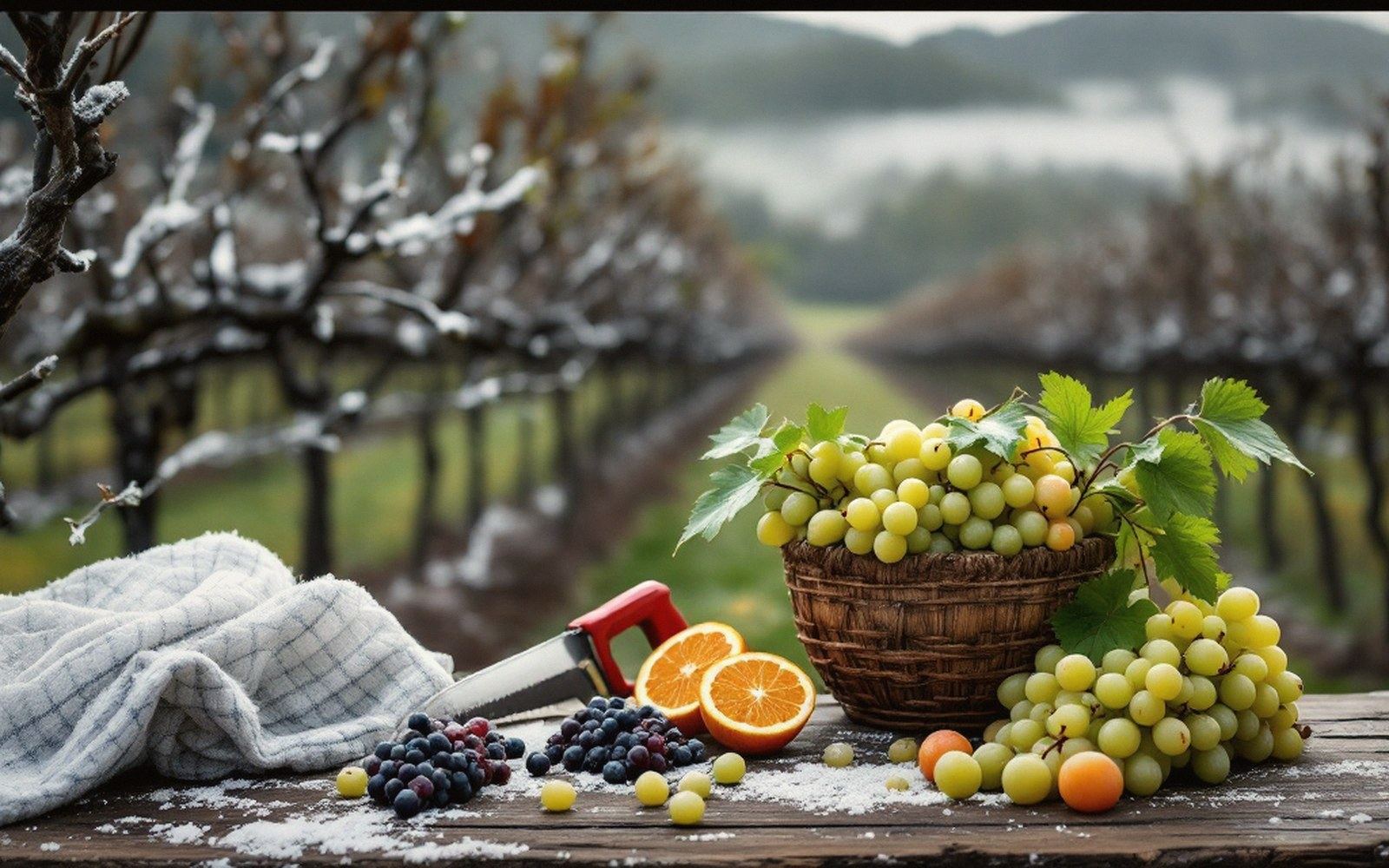
For growers waiting for minus eight , the thermometer is everything from November onward. The fruit hangs, the nets stay on, and the block is watched — sometimes daily, sometimes hour by hour — for the night that holds cold enough and long enough to freeze the grapes solid. That temperature, typically around minus eight Celsius, is not a suggestion. Below it, the water in the berry freezes and stays frozen through pressing. Above it, the ice melts before it reaches the press and the whole point is lost.
When the forecast finally delivers, there is almost never a choice about when to pick. The window is the window. If minus eight is predicted to arrive at midnight and lift by five or six in the morning, the crew arrives at midnight.
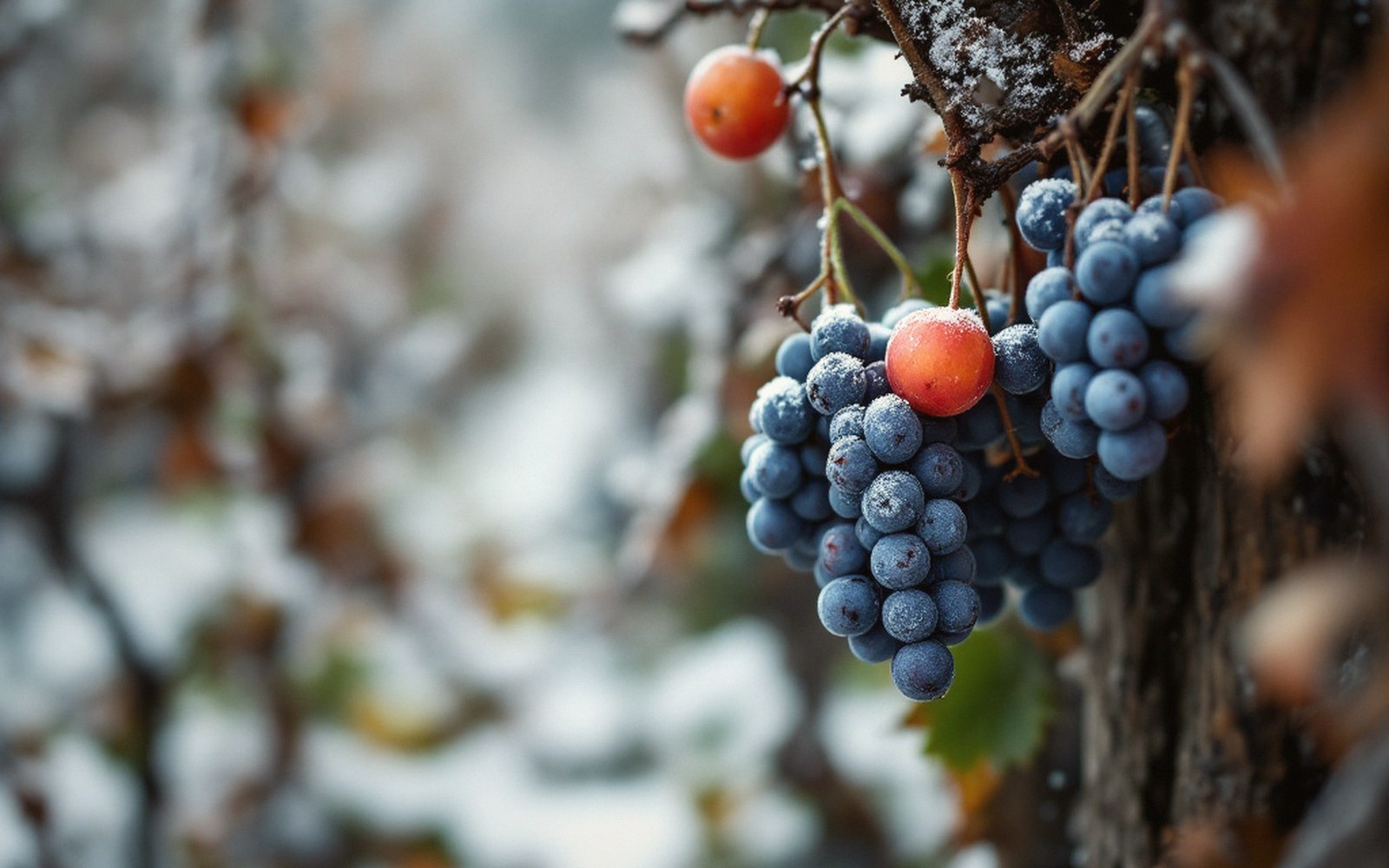
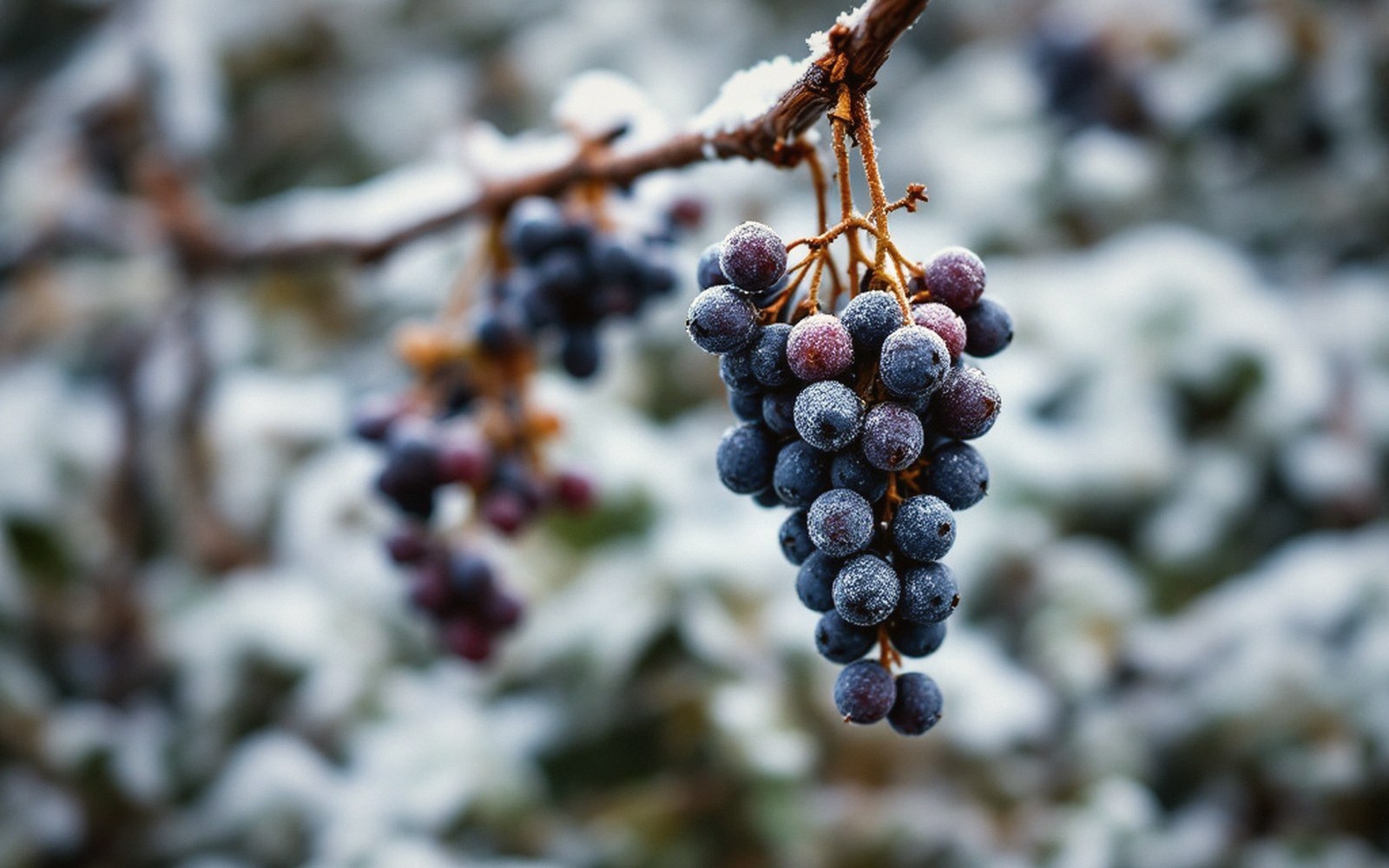
Headlamps go on. The rows are often frost-rimed, the canes brittle, the ground frozen underfoot. Breath shows in the beam of every light. The work is the same as any harvest — snip the cluster, lay it in the bin — but the cold makes everything slower. Fingers stiffen even in gloves. Clusters that have hung through November into December are desiccated and shrunken, often lightly botrytised; they do not look like summer fruit. They are dense with sugar, carrying very little free water, and they feel almost leathery in the hand.
Speed matters for a different reason than in autumn. A warm harvest races the sun and the spoilage it encourages; a freeze harvest races the dawn. The moment temperatures rise above the threshold, the ice in the berry begins to melt, and the concentrated juice that makes the wine possible starts to dilute back into ordinary sweetness. Every cluster in the bin that warms before it reaches the press is a cluster that has given back part of what the winter concentrated.
The bins go straight to the winery. The fruit goes into the press still hard, often smoking faintly in the cold air as volatiles escape, and the first slow press yields a trickle of juice so dense and sweet it barely pours.
Clusters that have hung through November into December are desiccated and shrunken, often lightly botrytised; they do not look like summer fruit.
After that, the block is empty. The year, which began the previous January with a saw and a count of buds, is finally done.