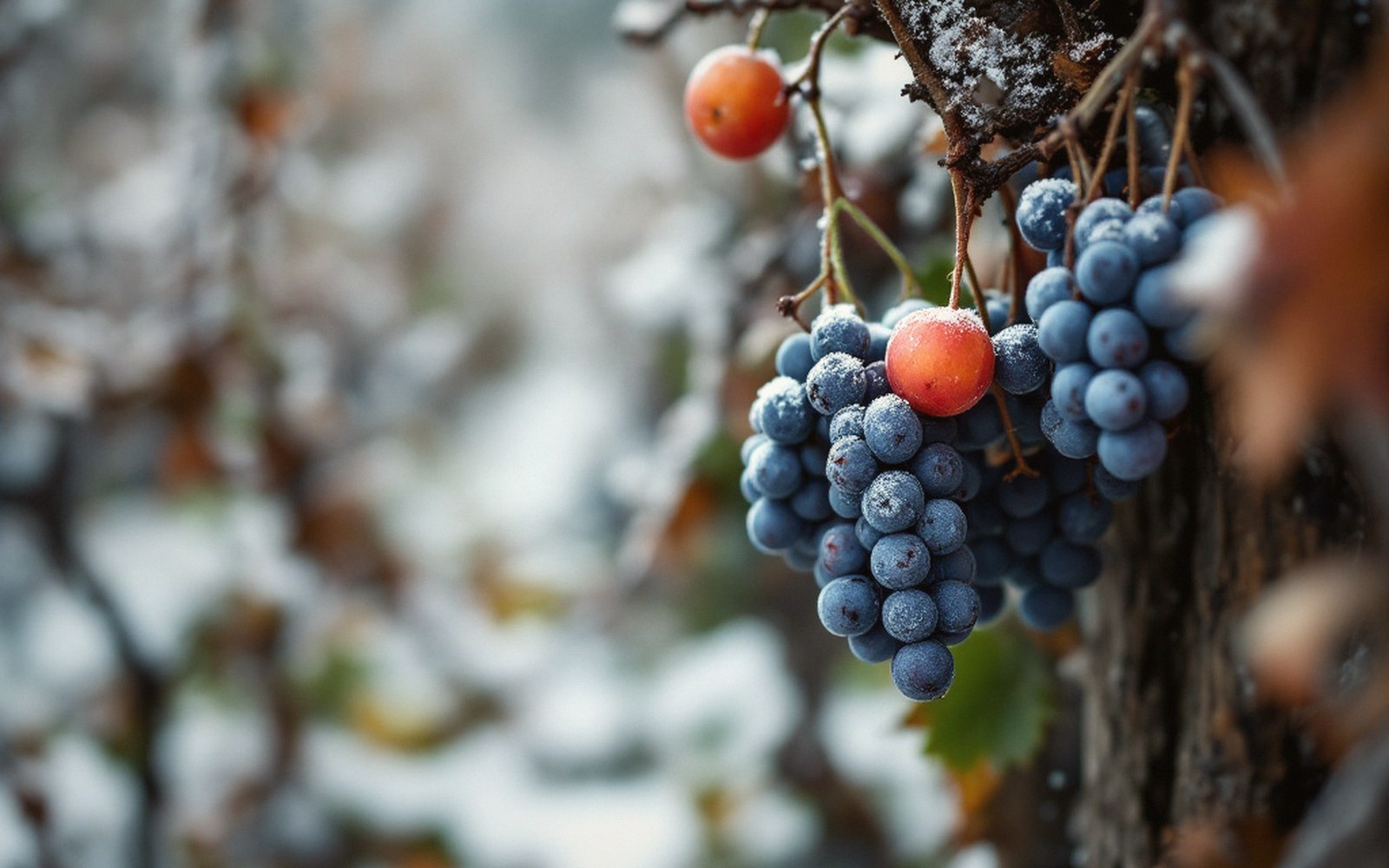
The Year It Never Came
When the cold fails to arrive, the fruit left waiting for the freeze just waits.
How long to hold before accepting that the winter will not deliver.
Hold to the end and the crop goes on the ground; pick early and it was never worth leaving out.
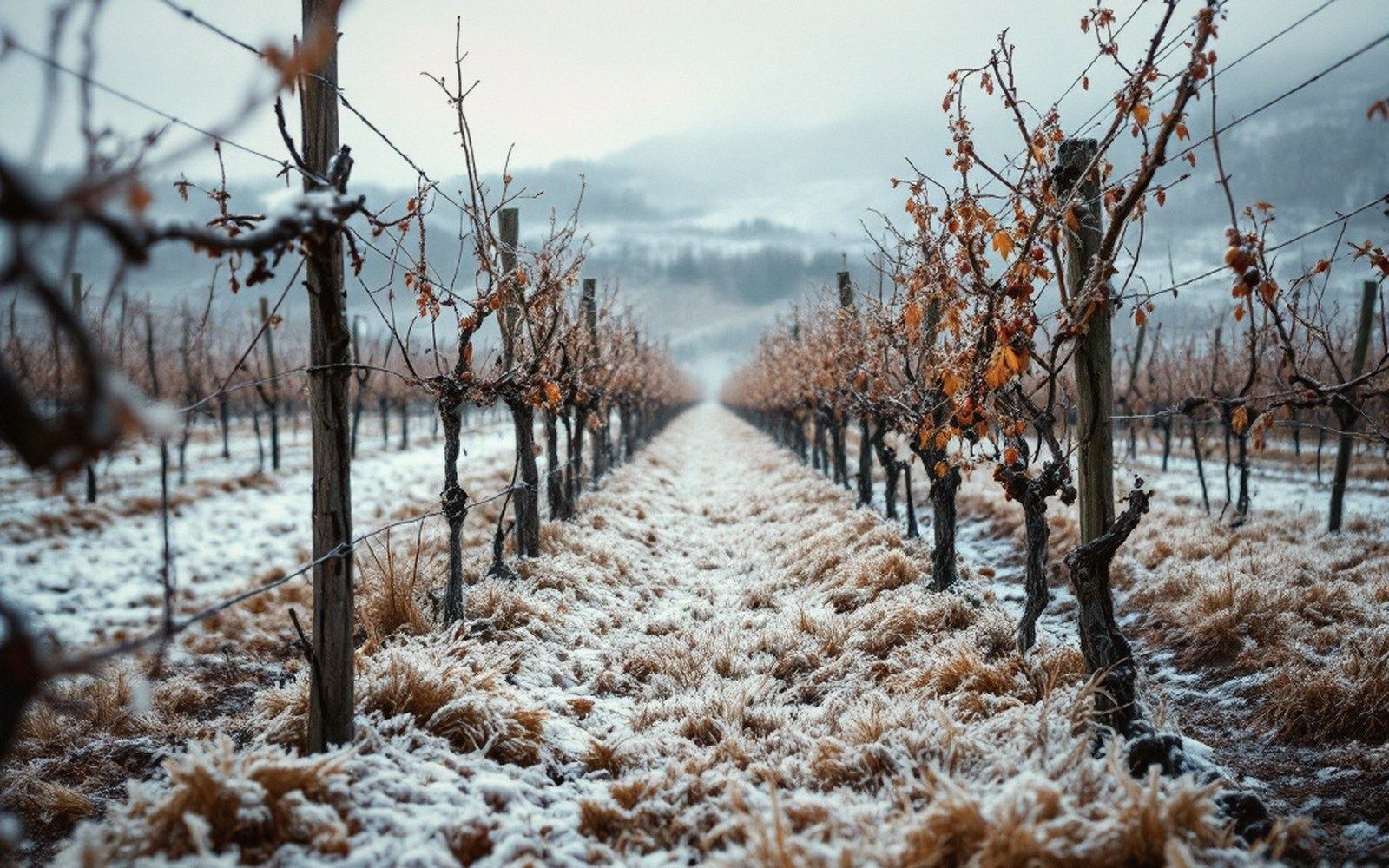
The Wire Holds Nothing
The plan is always the same by October: pull the last harvest in, leave certain blocks on the vine, net them against birds, and wait for a night cold enough to press frozen fruit — roughly minus eight Celsius and holding. The ice concentrates what the water dilutes. That is the whole logic.
Some years, that night never comes.
A warm autumn slides into a mild November. December stays grey and damp rather than hard. The nets are still on. The crew checks the forecast every morning. The fruit, which has been hanging since September and was already past ordinary ripeness, keeps losing structure. Botrytis — the grey rot — advances through bunches that should have been locked in cold by now. Sugar is high, but the skins are softening and the juice is beginning to smell of oxidation rather than fruit.
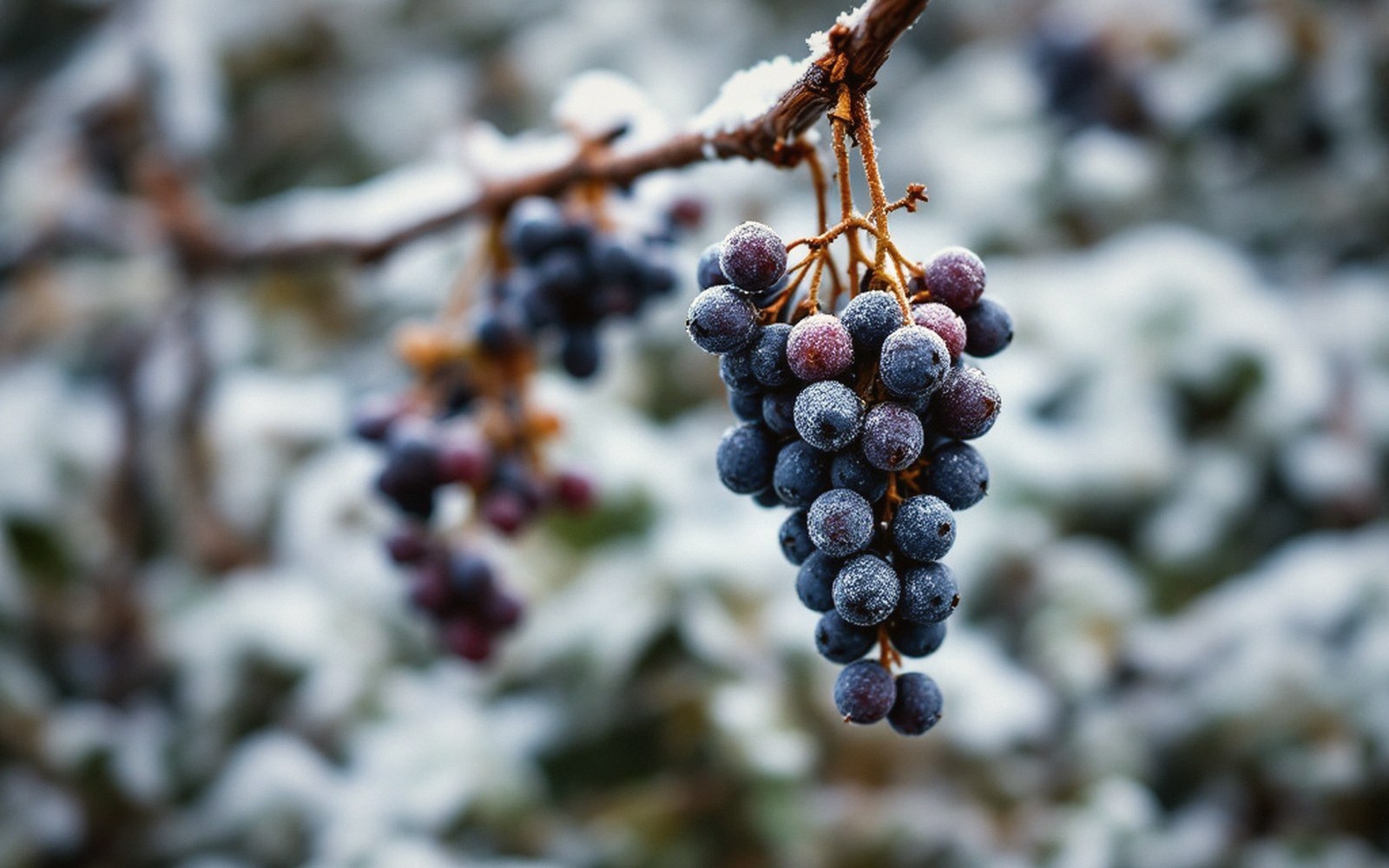
At some point — and this is the decision nobody likes — the fruit has to come in or be abandoned. Pressing grapes at plus two is not pressing frozen grapes. The water does not stay behind as ice; it presses out with everything else. The resulting juice is dilute relative to what minus eight would have yielded, and the wine, if it is made at all, will not qualify as the thing it was supposed to be. Regulations governing styles like icewine in Canada or Eiswein in Germany specify that the fruit must be frozen naturally on the vine at harvest. A warm year simply disqualifies the block.
The decision to cut the nets and strip the remaining fruit is a kind of quiet defeat. The grower has carried those vines through the whole season — through one frost night in May that threatened the buds, through the uneven ripening of August, through the weeks of netting — and the crop that was supposed to repay the patience just rots on the wire.
The fruit, which has been hanging since September and was already past ordinary ripeness, keeps losing structure.
What happens next is also instructive. The abandoned fruit, if it is left, feeds wasps and starlings and eventually falls. The vine does not care. It has already hardened off, moved its reserves back into the wood, and is waiting for whatever comes next. The vine is not disappointed. That particular feeling belongs entirely to the grower.