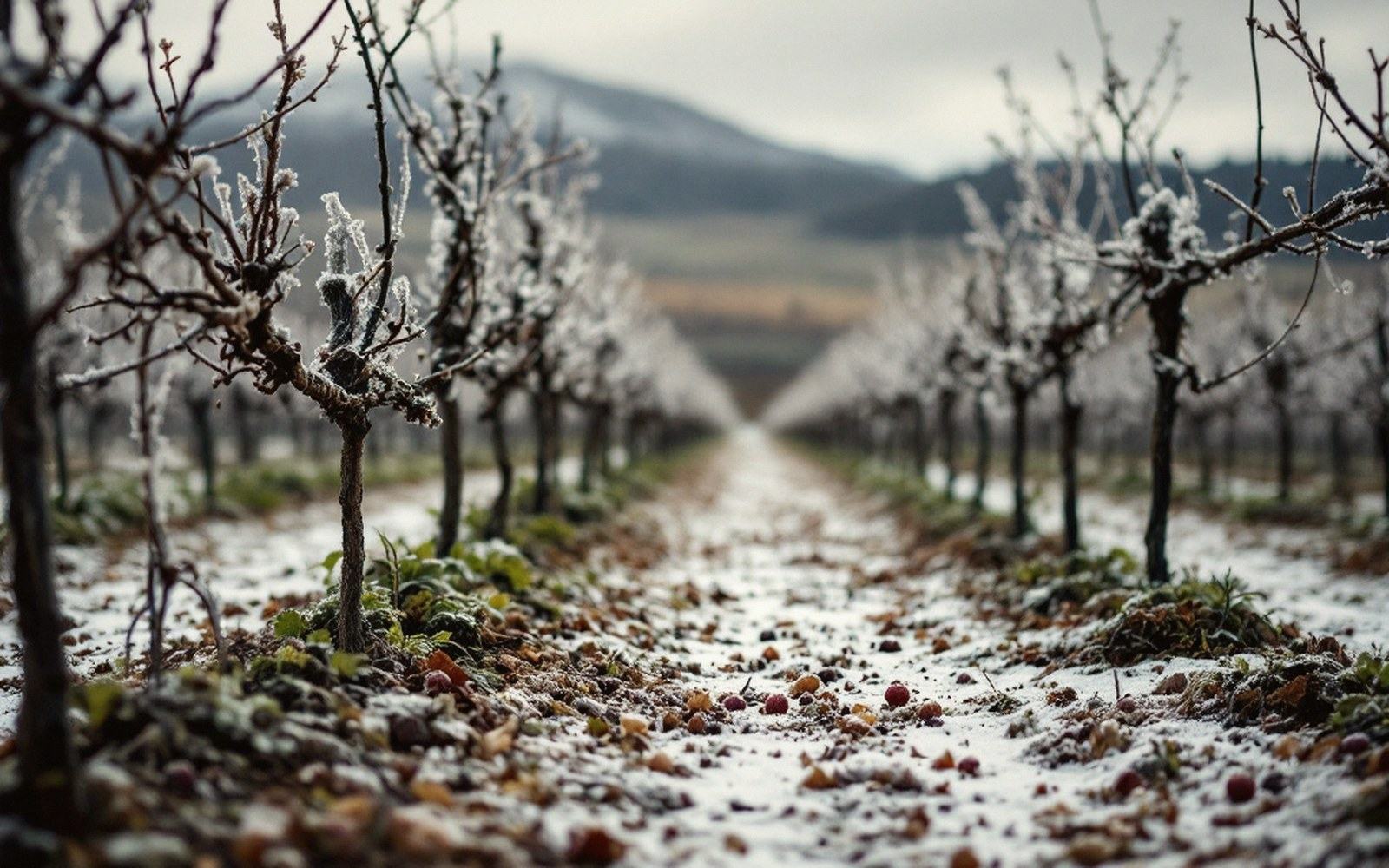
Hand or machine
The method changes what arrives at the winery — and what stays in the vineyard.
How the fruit comes off — by hand into bins, or by harvester.
The wrong method for the fruit brings in leaves, stems and broken skins for the winery to work around.
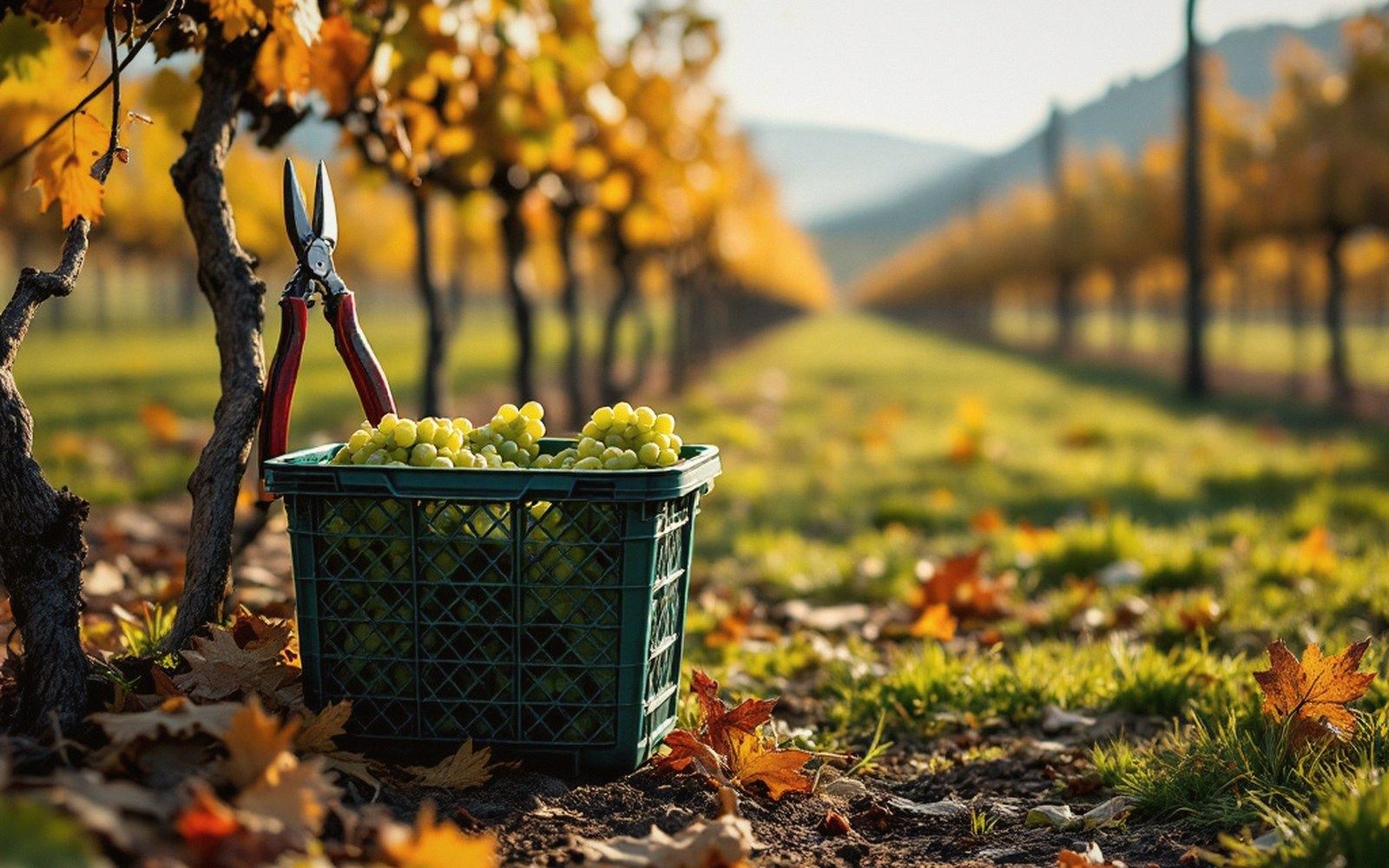
What the machine takes and what the hands leave
A mechanical harvester straddles the row and beats the canopy with fibreglass rods until the berries detach and fall onto a conveyor. It is fast, it runs through the night when temperatures are lowest, and a single machine can cover ground that would take a large crew days. What it cannot do is select. Rotten berries come in with sound ones, leaves and petioles ride along, and the skins take a bruising from the moment of strike. In a clean, healthy block — uniform variety, one ripeness across the row — the mechanical harvest is a defensible choice.
Hand-picking is slower and costs more per tonne. It is also selective by nature: a trained picker sees what is in the bunch and decides whether to take it. In mixed-ripeness blocks, on steep slopes where no machine can safely run, in vineyards training varieties with fragile skins, the hands stay ahead of the machine on every count that matters. Whole-cluster pressing — which preserves the stalk to act as a drainage channel through the press — requires the bunch to arrive intact, which means cutting, not beating.
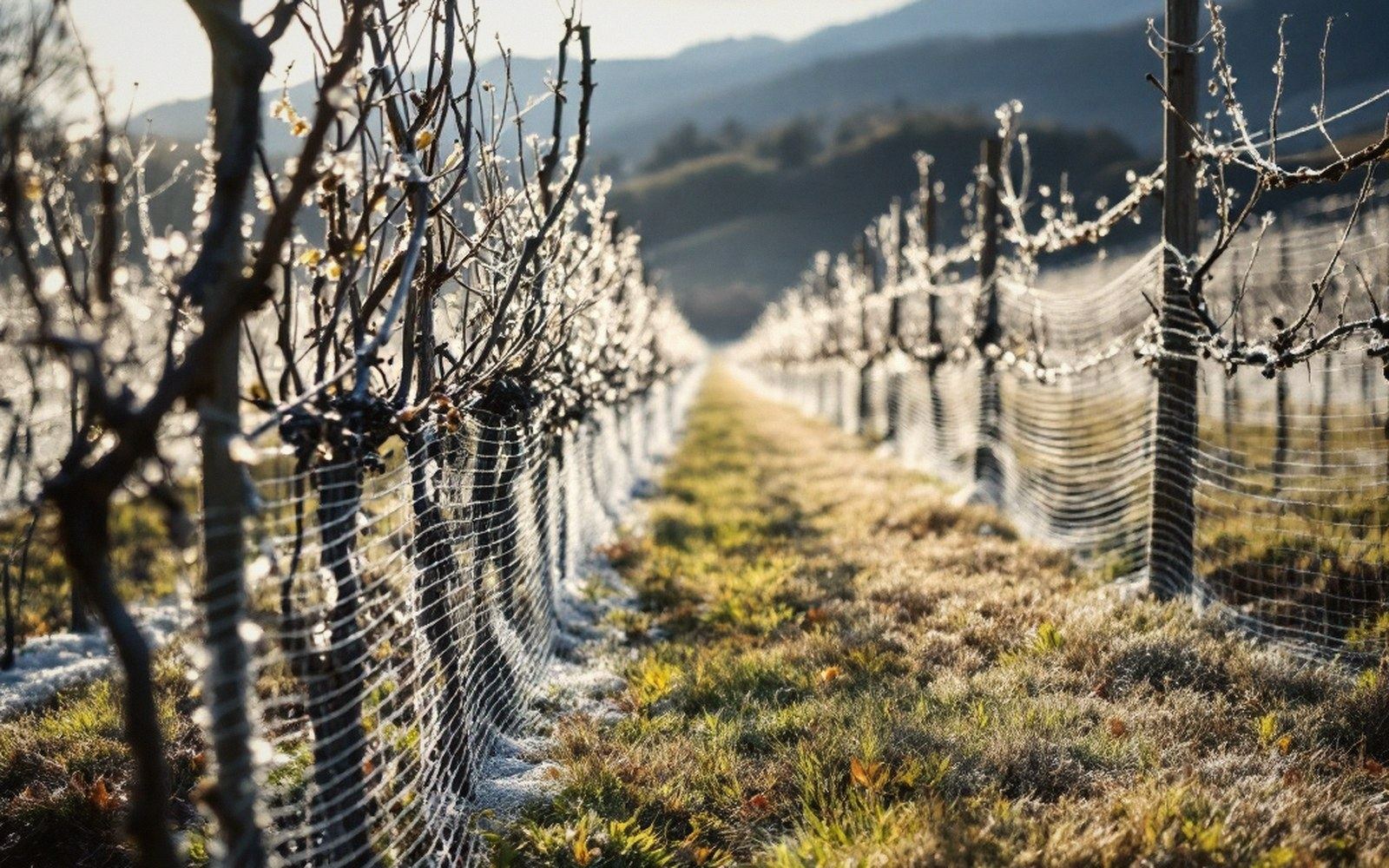
Temperature matters too. Grapes picked in afternoon heat arrive warm, and warm fruit begins fermenting before the winemaker intends. Night harvest with a machine solves the heat problem but surrenders selectivity. Night harvest by hand — which does happen in warmer climates and on smaller estates — recovers both, at considerable cost. Cool-climate vineyards below escarpments often get a natural temperature advantage at dawn that makes the calculus different: a morning pick in October air at five degrees Celsius is already cold fruit, hand-cut.
Neither method is categorically better. The honest question is what the block actually holds. A healthy, even, low-slope block in a dry autumn suits the machine well. A patchy, frost-affected, mixed-ripeness block on a gradient is hand-pick territory, or it becomes a sorting problem at the winery — which is a different kind of expense.
Whole-cluster pressing — which preserves the stalk to act as a drainage channel through the press — requires the bunch to arrive intact, which means cutting, not beating.