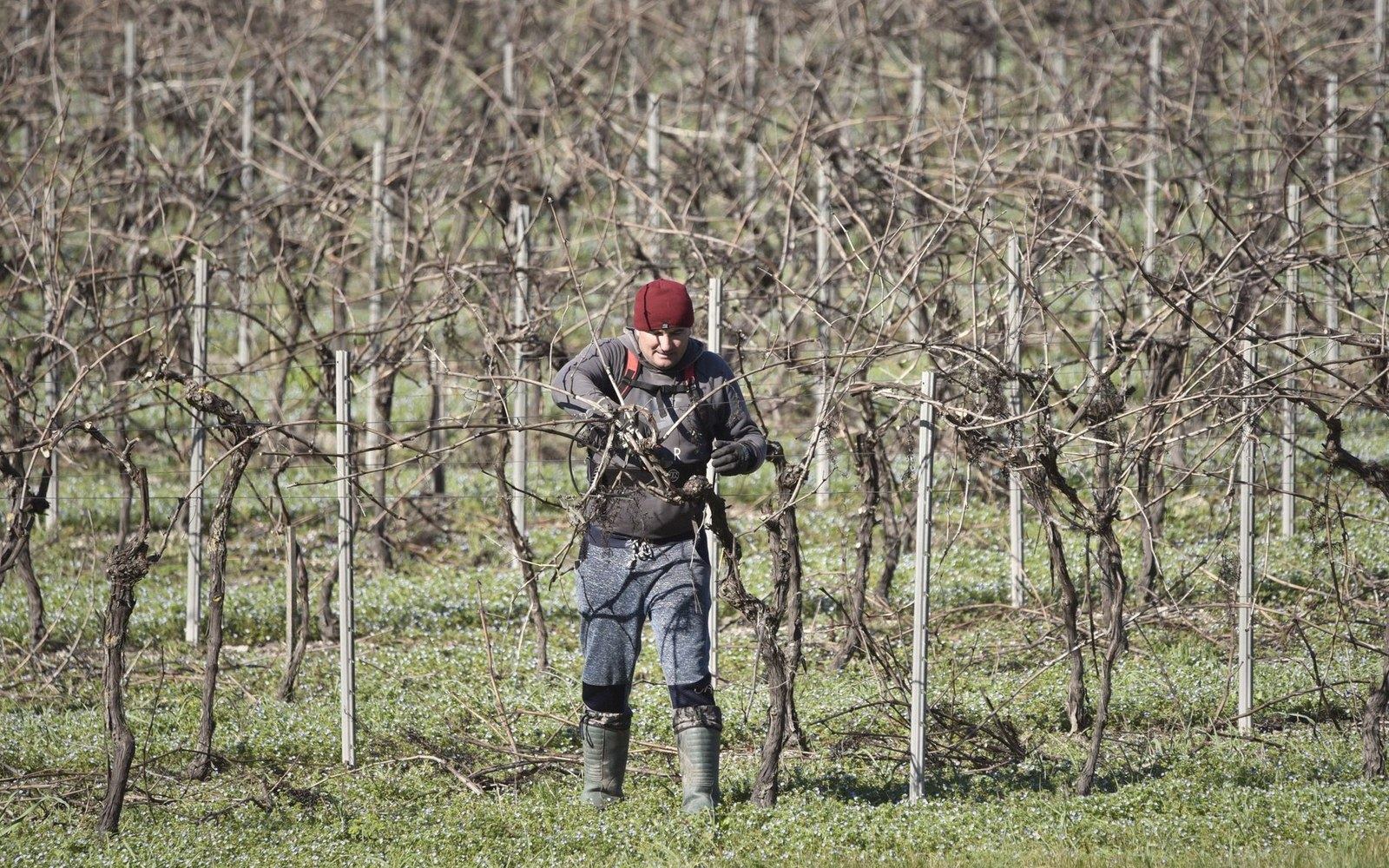
Burying the Vine
Whether the trunk goes under soil before the winter closes in.
An unburied vine where winters run that hard is dead wood by spring.
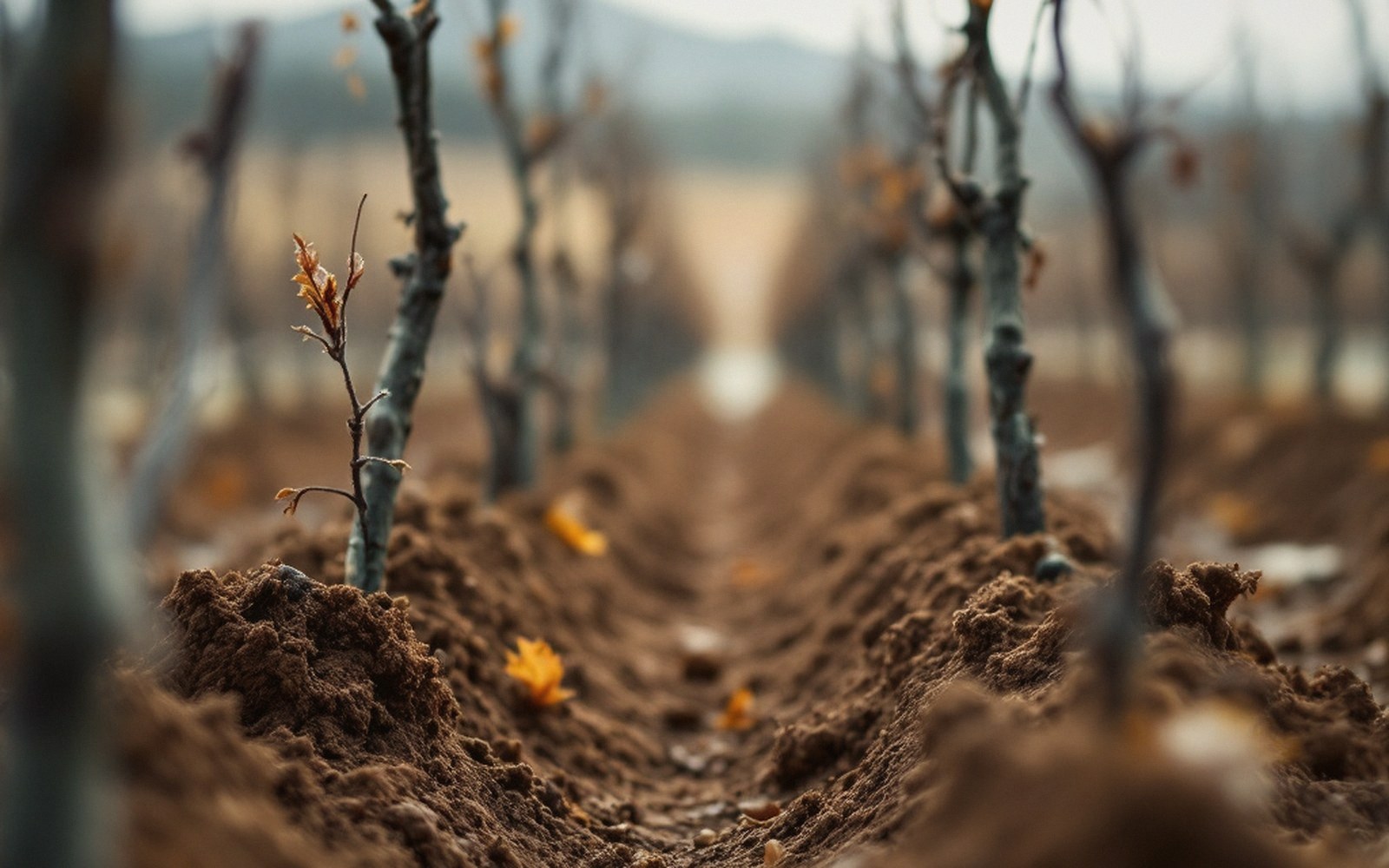
Where the cold goes past what wood can take
In most cool-climate vineyards, winter is a waiting game. The vine goes dormant, the grower prunes, and both survive. But in continental climates where January temperatures can drop to minus twenty-five or thirty degrees Celsius — central Asia, the interior of China, parts of Canada's Okanagan, the eastern reaches of European wine country — dormancy is not enough. At those temperatures, a grapevine's trunk and cordons will simply die. The answer, practiced for centuries, is to put the vine underground.
The technique is called burying, or hilling-up. After harvest and after the first hard frosts have triggered full dormancy, the grower disconnects the canes from the trellis wire and bends the whole head of the vine — trunk, arms and canes — down along the row. This takes some preparation: vines grown in these regions are often trained low and on a slight lean toward the direction of burial, so the annual bending does not split the wood. A split trunk is a dead vine. Then soil is mounded over the prone vine, typically to a depth of twenty to thirty centimetres. That layer of earth is not warming the vine; it is insulating it, preventing the temperature around the wood from falling anywhere near what the open air reaches.
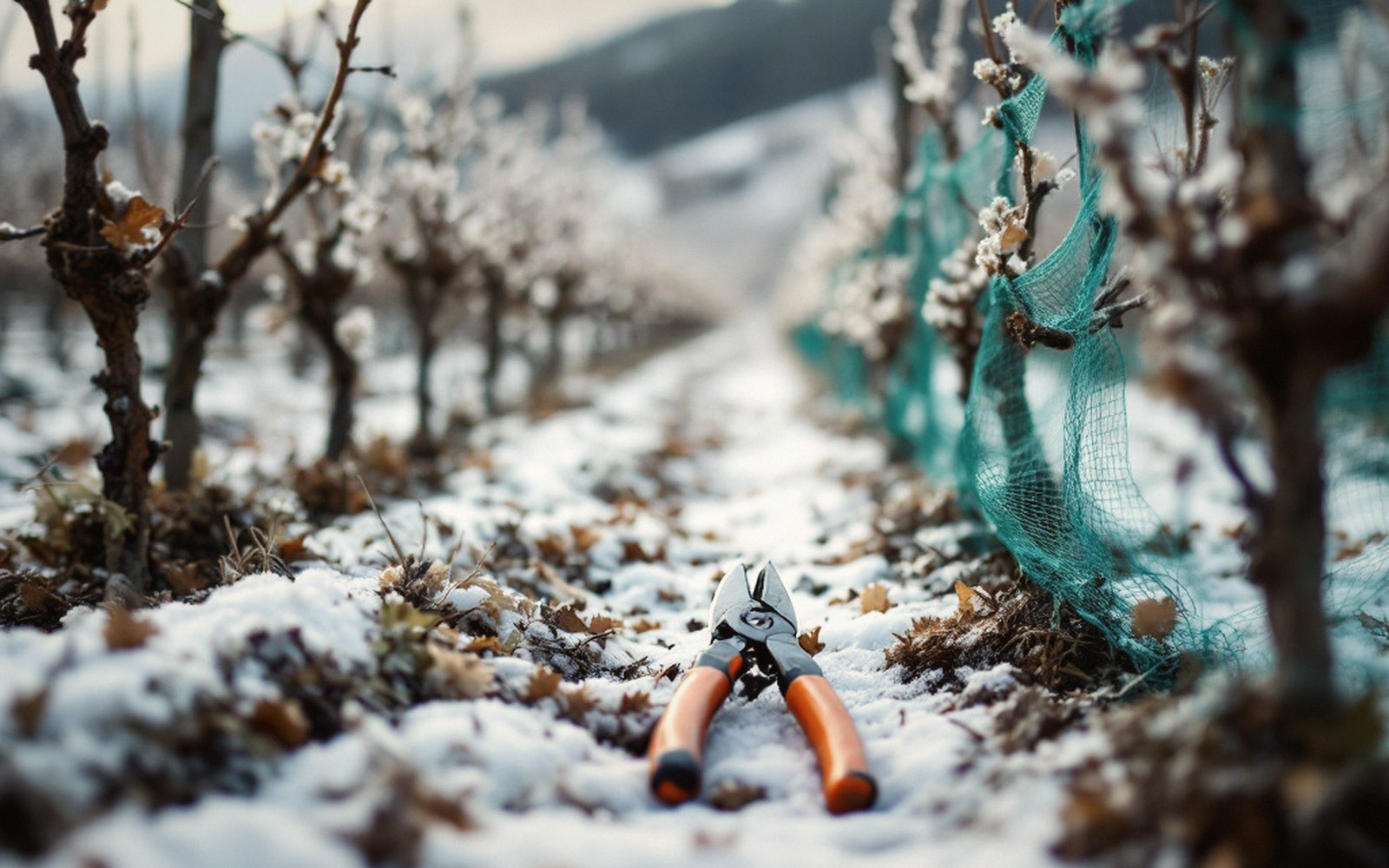
Timing on both ends is critical. Bury too early and the vine is not yet fully dormant; soil warmth can trigger untimely growth. Bury too late and an early hard freeze takes the wood before it is covered. In spring, the vine must be uncovered before the soil warms enough to force growth underneath — shoots that emerge in the dark and push up through soil are weakened before they ever see light. The uncovering is done by hand or with a small disc plow, working carefully along the row, then the canes are retied to the wire and the season begins.
The labour cost is significant. Burying and unburying a hectare of vines can take many days of hand work, which is why the practice has declined wherever mechanical alternatives exist — and why, in many of the regions that once relied on it, producers have shifted to deeply cold-hardy rootstocks and varieties that can survive without it. But in blocks where the variety is worth the effort and the winters give no other choice, the vine still goes underground each November, and comes back up in April exactly as it has for generations.
That layer of earth is not warming the vine; it is insulating it, preventing the temperature around the wood from falling anywhere near what the open air reaches.