Air Drainage
Which ground gets planted, and which is left empty.
Vines set in the low flat sit in the cold air that drains into it on every clear night.
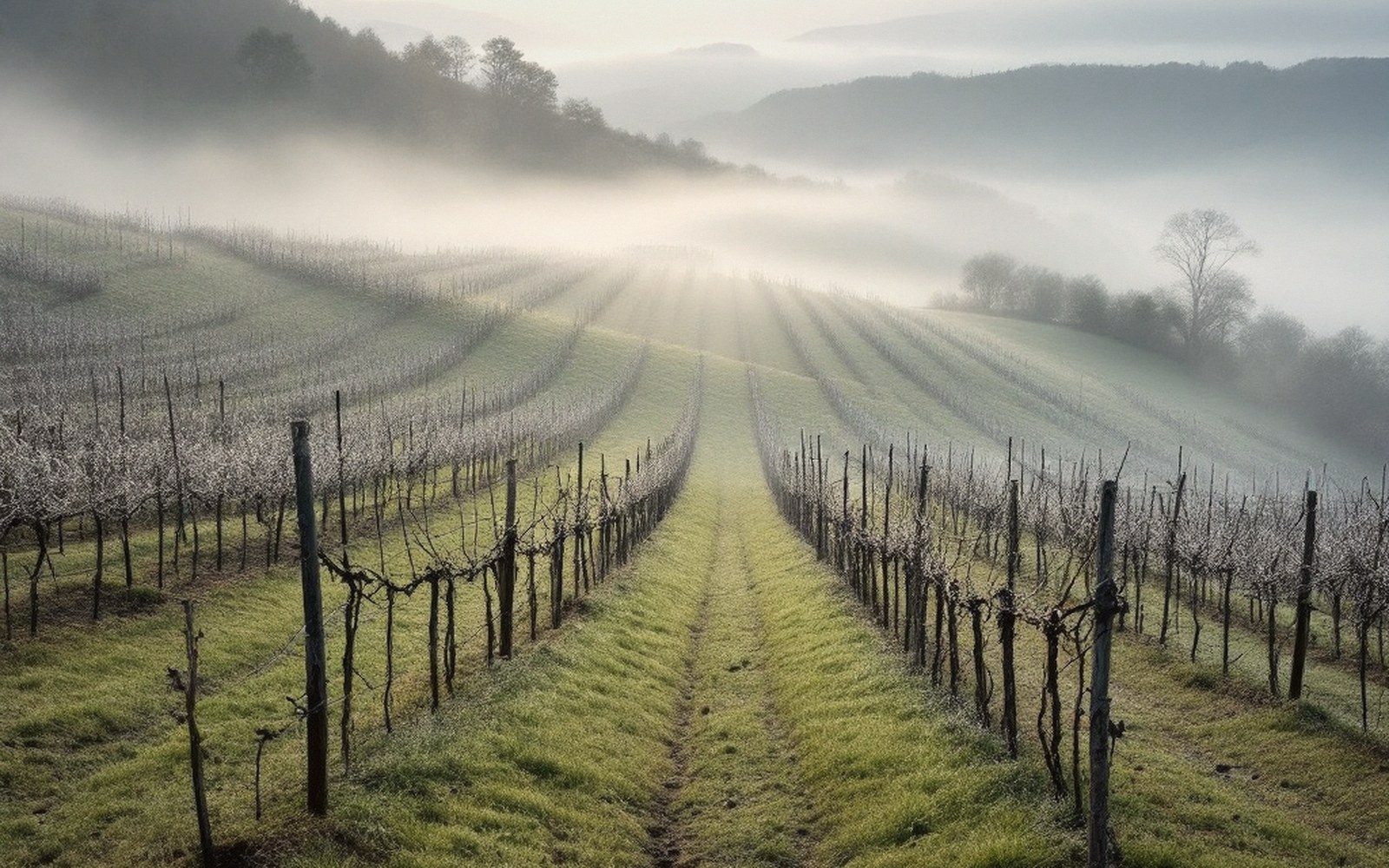
Why the good ground is on the slope
Cold air behaves like water. It is denser than warm air, and on a still, clear night — exactly the kind of night that produces a killing frost — it flows downhill and pools in the lowest ground it can find. A hollow, a valley floor, the inside of a bend in a river: these are the places where cold air collects. They are also, very often, the places that flood every spring. Both are the same phenomenon wearing different clothes.
The slope above the valley floor sits in a different thermal world. As cold air drains away downhill, slightly warmer air from above replaces it. The temperature on a well-positioned mid-slope site can be several degrees higher than the floor a hundred metres below, on the same night, at the same hour. A few degrees is the entire margin between a frost that scorches new growth and one that passes without damage.
This is why the best vineyard ground in cool climates so consistently occupies the middle and upper slopes beneath an escarpment or ridge. The escarpment does two things: it catches and deflects cold winds, and its slopes give cold air somewhere to go. The air drains, and the vines above the drainage line stay just warm enough.
The word growers use for a site that loses its cold air efficiently is well-drained in the thermal sense — distinct from but often companion to good water drainage in the soil below. A site with both sits on free-draining mineral soils that shed moisture quickly, on a slope that sheds cold air just as readily. Neither puddles. Neither freezes when everything around it does.
Where the cold air stops moving — where a hedgerow, a wall, a treeline or a depression breaks the slope and traps the flow — is called a frost pocket. These are dangerous in direct proportion to how invisible they are in daylight. A patch of ground that shows no obvious problem in summer can reliably lose three or four nights of growth per spring. Experienced growers know exactly where those pockets are on their land. Beginners find out.
The temperature on a well-positioned mid-slope site can be several degrees higher than the floor a hundred metres below, on the same night, at the same hour.
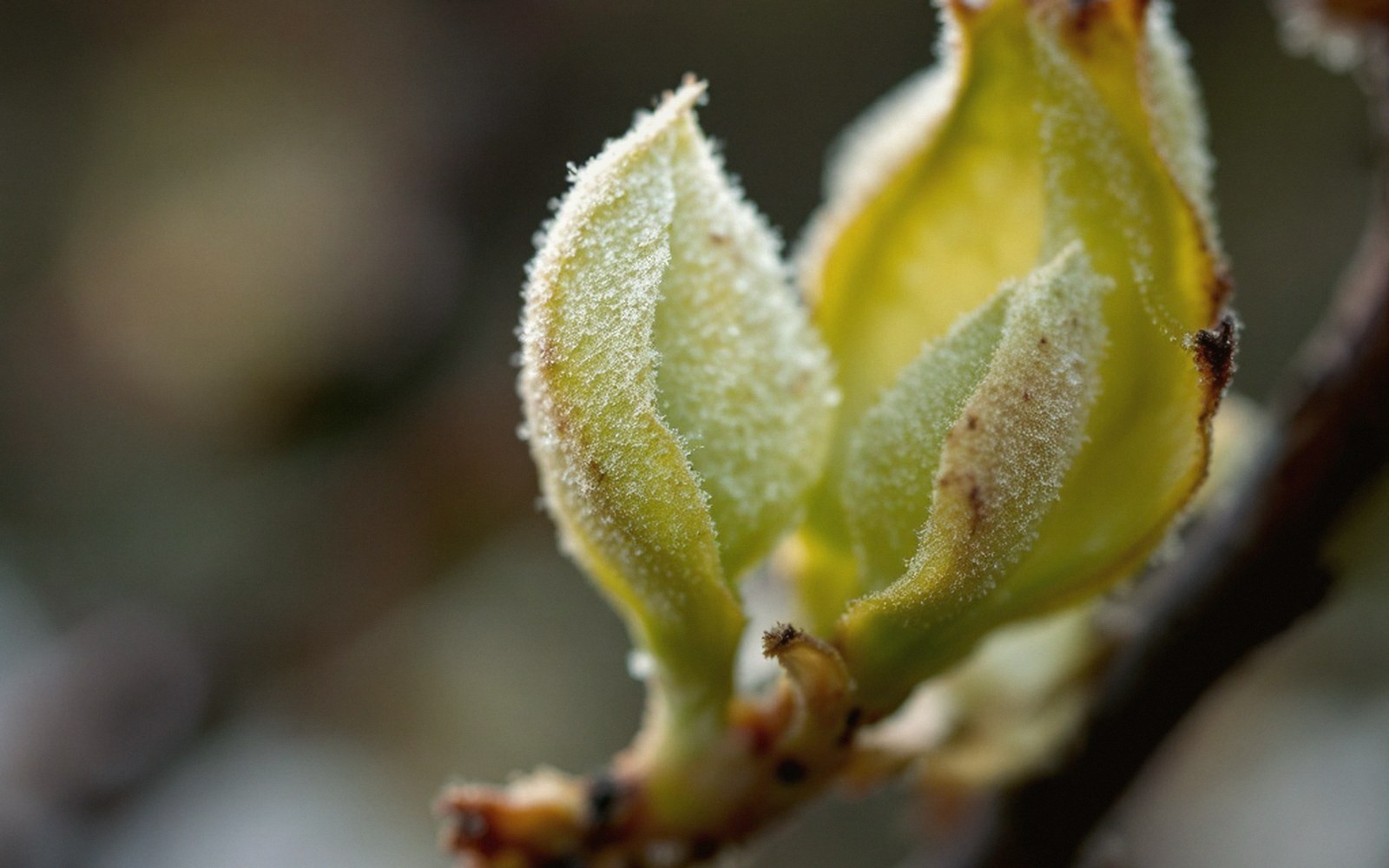
Bud break and the weeks immediately after are when the geometry of the site becomes consequential. One night in May is enough to strip a season's potential from ground that lets cold air sit. The slope is not just topography. It is protection.