Shoot Thinning
Which shoots are pulled off by hand in early summer, and how many are left.
Left dense, the row shades itself and every bunch ripens later and wetter than it should.
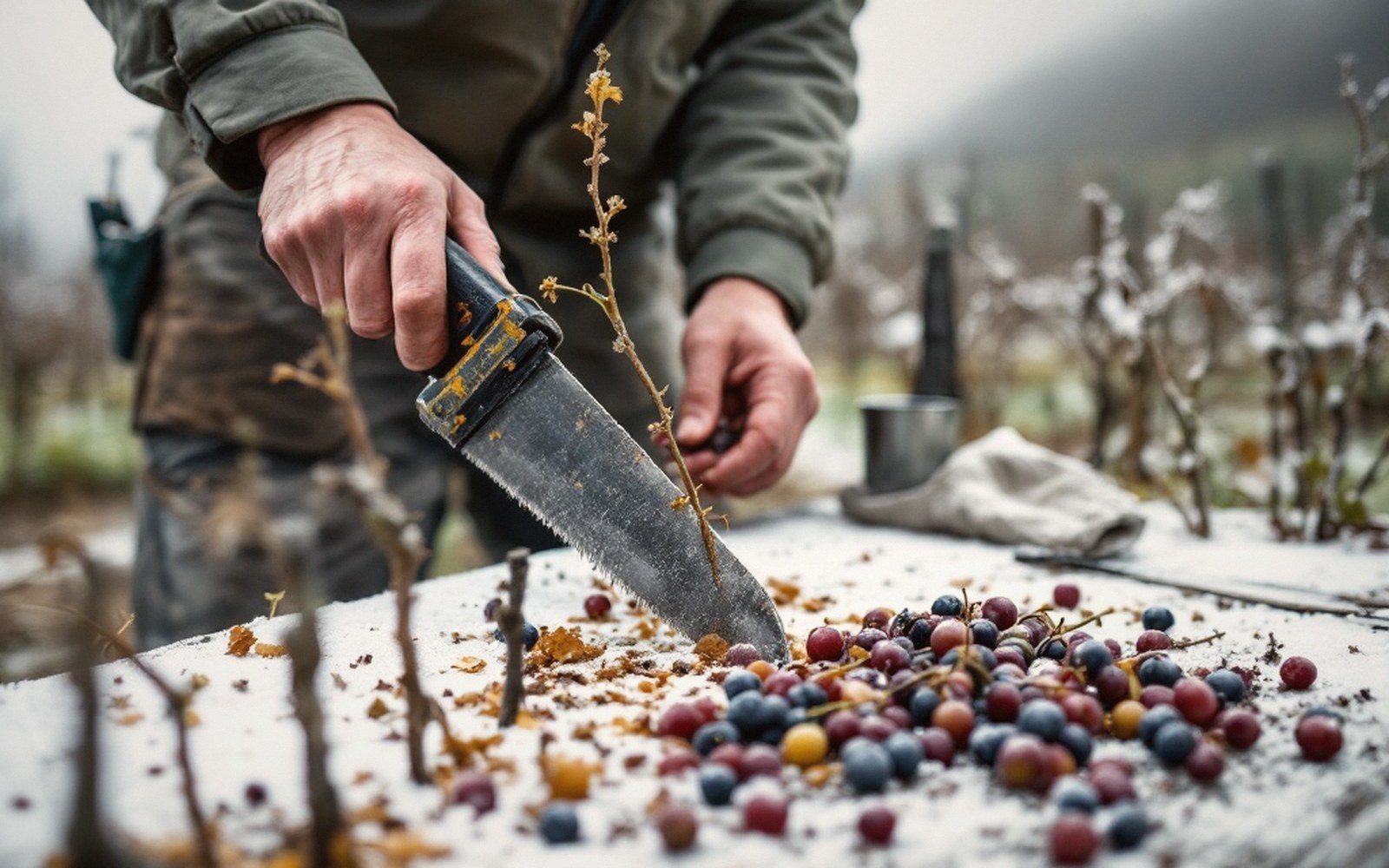
The first cut of summer is made by hand, not blade
Every cane left through the winter was carrying a calculated number of buds, and every bud that broke in spring became a shoot. The arithmetic was deliberate — but the vine does not read the plan. Some nodes push two shoots instead of one, some throw a water shoot from old wood, some produce growth that is simply too congested to do useful work. By the time early summer arrives, the canopy is already crowding itself, and the question is what to do about it.
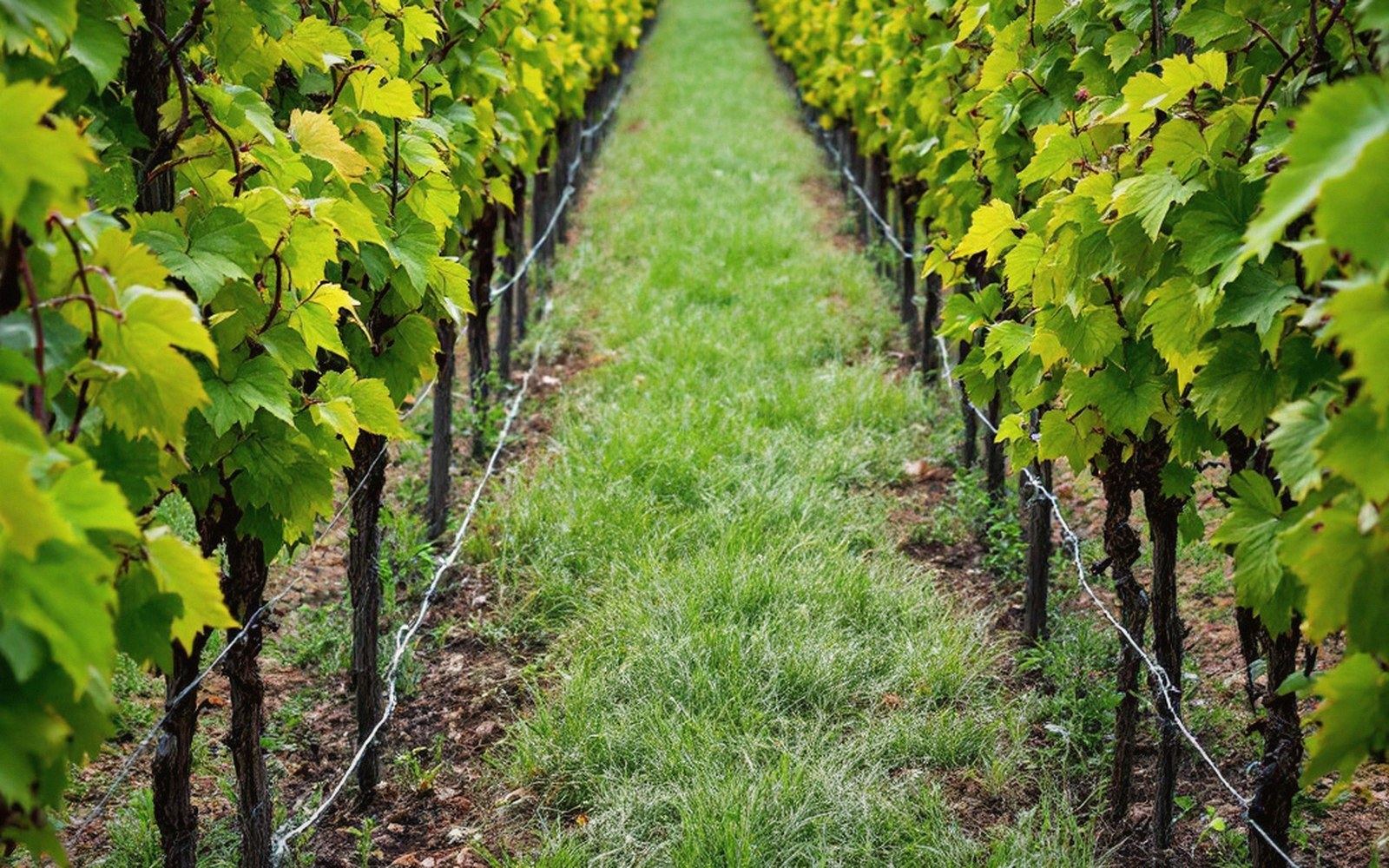
Removing what the vine does not need
Shoot thinning is the answer: removing surplus growth by hand, early enough that the vine redirects its energy before the season accelerates. The timing matters. Do it too early and you lose a hedge against frost damage — a secondary shoot that looked redundant might be the only green thing left after a late cold night. Do it too late and the removed shoot has already drawn resources the remaining ones could have used. The window is roughly the first few weeks after budbreak, once it is clear what has survived and what the canopy is actually going to look like.
The work is straightforward but unforgiving of carelessness. A double shoot at a node — one primary and one secondary — usually means the weaker one comes off. Water shoots rising from the base of the trunk or from below the graft union come off as a rule, since they draw hard from the root system and produce no useful fruit. Shoots growing inward, downward, or into positions the trellis cannot support are the next to go.
What is left should be spaced evenly along the cordon or cane, one shoot to a position, with enough air between them that summer will not close the canopy entirely before anyone has a chance to manage it. The canopy is the engine: leaf area drives photosynthesis, which drives sugar accumulation, which determines what arrives at harvest. Crowded leaves shade each other, raise humidity inside the row, and slow ripening. Shoot thinning is the first and cheapest intervention against all of that.
Water shoots rising from the base of the trunk or from below the graft union come off as a rule, since they draw hard from the root system and produce no useful fruit.
The labour cost is real. An acre of well-established vines can take a day of careful walking, or longer if the season has been warm and vigorous. Some growers do two passes. On steep ground or rocky soil where mechanisation cannot reach, every shoot is touched by hand. There is no machine that does this well.
Done right, the row opens up, the remaining shoots straighten to the wire, and the summer begins with an even, manageable canopy. Every decision made later — hedging, leaf removal, green harvest — is easier if this early edit was done cleanly.